

What if the house and land deal with the biggest headline isn’t the best fit for your plans? It’s easy to see why promotions catch your eye, but the advertised price may not tell you how the land, home design, inclusions and build terms work together. Comparing the detail matters more than comparing the headline.
You’ll learn how to assess what a package covers, spot details that can affect your overall plans, and compare options on a like-for-like basis. We’ll look at land selection, design flexibility, inclusions, exclusions and contract terms, so you can focus on the value that matters to you.
There’s no single package that suits every buyer. Your budget, preferred home and priorities all shape what a good deal looks like. Power Housing coordinates tailored house and land packages by aligning land selection with residential design, with custom home design assistance to help shape a home around your needs. Use this guide to assess the substance of house and land deals and find a considered path from choosing land to planning a home that fits.
Key Takeaways
- Separate promotional language from the actual terms, so you can see what a house and land deal is offering.
- Use a consistent sequence to review the land, design, stated inclusions and offer conditions.
- Compare options by how well they suit your plans, not by the advertised price alone.
- Set your non-negotiables and preferred design choices before shortlisting packages.
- See how tailored coordination can align land selection and residential design with your priorities.
House and land deals: look beyond the headline offer
A “deal” can sound like a shortcut to value. But house and land deals can describe different things: a combined opportunity involving a block and a home design, a promotion applied to a package, or a particular set of terms. Those meanings aren’t interchangeable. Before comparing options, identify exactly what’s being offered and how it relates to your plans.
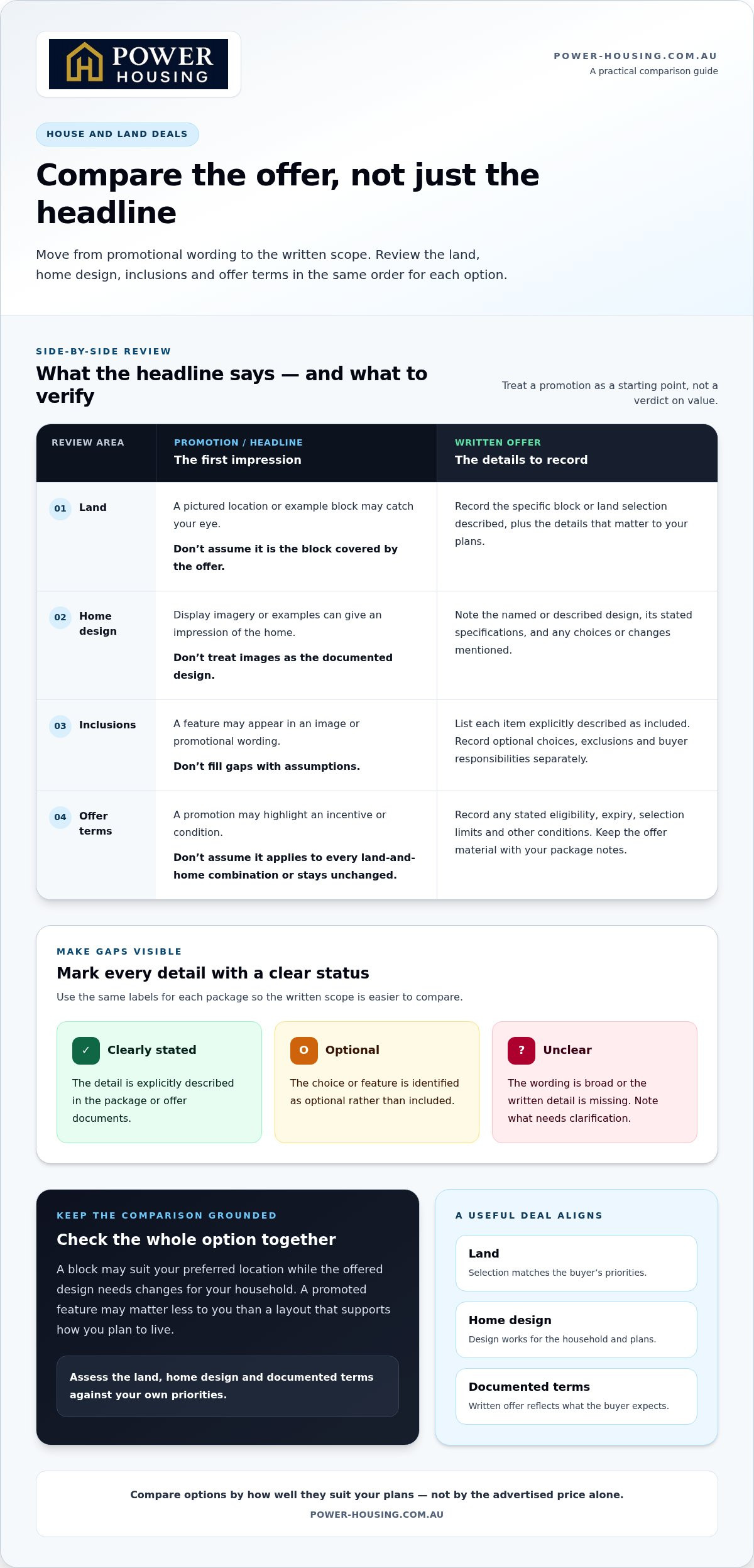
A useful deal aligns the land, home design and documented terms with the buyer’s priorities. The headline may attract attention, but it can’t show whether the block suits your needs, the design works for your household or the written offer reflects what you expect. Treat the promotion as a starting point, not a verdict on value.
What buyers may mean by a house and land deal
A combined land-and-home option brings a land selection and residential design together as a potential new-home pathway. A promotion, by contrast, may apply a particular incentive or condition to an offer. Some buyers use “deal” to mean both at once. The structure, stated inclusions and conditions depend on the specific offer and its documents, so don’t assume every package works the same way.
Why headline promotions do not tell the whole story
Promotional wording may highlight one appealing feature, but it doesn’t establish whether the whole option fits. Look at the land, design and written terms together. For instance, a block might suit your preferred location while the offered design needs changes to work for your household. Or a promoted feature may matter less to you than having a layout that supports how you plan to live.
Separate what’s clearly described from what you’re inferring. Note the specific land and design, identify the stated inclusions, then read the relevant offer terms in the documents. If a phrase sounds broad or persuasive, find the written detail that explains what it means in practice. That simple discipline makes comparisons more grounded and helps prevent a promotion from overshadowing the fundamentals.
For a broader perspective on how property decisions can involve valuation and financing considerations, see this Real Estate Investing Overview. For a house and land decision, bring the focus back to your own priorities: which land characteristics matter, what kind of home suits your plans, and which terms shape the offer?
Use the tailored house and land packages guide as a next step in understanding how land and home design can be considered together. Power Housing coordinates tailored packages by matching land with residential designs and provides custom home design assistance. That approach can help connect your priorities to a suitable starting point, rather than asking you to treat a headline promotion as the whole decision.
How to unpack the scope and terms of house and land deals
Move from the headline to the documents, one component at a time. Written scope matters more than an unqualified promotional headline. A clear review helps you distinguish what an offer describes from what you might be assuming. Keep the land, design, inclusions and promotion details in view, and note where information is unclear rather than treating marketing language as a firm commitment.
Use the same sequence for each option:
- Identify the land. Record the specific block or land selection described and the details that matter to your plans. Don’t assume a pictured location or example block is the one covered by the offer.
- Review the home design. Note the design named or described, its stated specifications and any choices or changes mentioned. Distinguish the documented design from display imagery or examples.
- List the inclusions. Write down each item explicitly described as included. Record optional choices, exclusions and buyer responsibilities separately, rather than filling gaps with assumptions.
- Read the offer terms. Note any stated eligibility, expiry, selection limits or other conditions attached to a promotion. Keep this material with the package information.
Check what the advertised package actually describes
Keep land details, design information and inclusions in separate notes. This makes gaps easier to identify. For example, a feature shown in an image may not appear in the written inclusions, while a design may be presented as a starting point rather than the exact home described in the package material. Mark each item as clearly stated, optional or unclear to create a more useful basis for comparison.
Apply the same care to home inclusions. Separate specified items from features that appear only in display imagery or promotional wording. If a document uses broad language, record the wording and note what needs clarification. This review helps you understand the material; it isn’t a legal interpretation of the offer.
Read the conditions attached to a promotion
Promotions can have different terms, so review the current offer material for eligibility, expiry, selection limits and any other stated conditions. Note the version or date of the material you’ve reviewed, and keep it with your comparison notes. Don’t assume a promotion applies to every land-and-home combination or continues unchanged across different offers.
Keep questions about Australian grants or assistance separate from a package’s promotional terms. Eligibility and conditions can depend on the relevant scheme and your circumstances, so use current information from the appropriate Australian government authority. If you’re reviewing legal or consumer-protection claims, have them checked against current Australian sources rather than relying on promotional wording or a general summary.
Once you’ve organised the documents, compare their written scope with your priorities. Power Housing coordinates tailored packages by matching land with residential designs, with custom home design assistance to help shape an option around your plans. Explore tailored house and land package coordination as you develop your shortlist.
Compare house and land deals by fit, not just promotion
A side-by-side comparison makes differences easier to see. Use the same categories and level of detail for every option, and record what the documents state rather than what you expect might be included. The advertised price belongs in the comparison, but it’s only one input. On its own, it can’t show whether the land and design suit your needs or how the offer conditions affect your decision.
Start with this framework. Add details from each option’s written material, and mark anything unclear instead of treating it as a fact.
| Comparison point | Option A | Option B | What to consider |
|---|---|---|---|
| Land suitability | Record the land details provided | Record the land details provided | Does each option align with the location and land characteristics you prioritise? |
| Design fit | Note the described design and choices | Note the described design and choices | Does the layout suit your household and preferred features? |
| Stated inclusions | List written inclusions and exclusions | List written inclusions and exclusions | Are you comparing equivalent items, or do the scopes differ? |
| Offer conditions | Summarise stated terms | Summarise stated terms | Could eligibility, time limits or selection conditions affect the option’s fit? |
| Advertised price | Record the stated amount | Record the stated amount | Weigh it alongside scope, fit and conditions, not as proof of value. |
Compare like with like across the offer
Keep the comparison consistent. If one option describes a specific inclusion and another uses broader wording, record the difference rather than assuming they mean the same thing. Separate documented details from assumptions about future choices or outcomes. This helps explain why offers that look similar at first glance may not be directly comparable once you account for their scope and conditions.
Test the deal against your home and land priorities
Bring your household’s needs into the comparison. Consider how you use shared spaces, which design features matter most and what land characteristics are important to your plans. A design that seems suitable on its own may not work as well for a particular block or your preferred way of living. Rank your priorities, then note where each option aligns and where it involves a compromise.
A package isn’t automatically better or worse than selecting land and a home design separately. The right path depends on the specific options, their written scope and how well they fit your priorities. If you’re also weighing a new home against an existing one, treat that as a broader purchase decision with different features to consider. Avoid assuming either route will deliver savings, resale value or future performance without evidence relevant to your circumstances.
Keep your comparison grounded in the documents for each option and the priorities you’ve set. Power Housing coordinates tailored packages by matching land with residential designs, with custom home design assistance to help align an option with your plans. Explore tailored house and land coordination as you shape your shortlist.
Use this checklist to shortlist house and land deals
A shortlist works best when it reflects your plans, not the language of a promotion. Set your priorities first, then use the same checklist for every option. This gives you a consistent way to identify strong matches, acceptable compromises and details that still need answers.
Set your priorities before choosing a deal
Separate essential requirements from preferences. Essentials might include the number of bedrooms or a layout that supports your household’s routines. Preferences could include particular finishes or design features you’d consider changing. Note which land characteristics matter to your plans, too. Apply this same priority list to each option before weighing promotional terms.
- Non-negotiables: Record the home requirements you won’t compromise on, such as essential spaces or a suitable layout.
- Design preferences: List the features you’d like, then mark which ones are flexible.
- Land priorities: Note the location and land characteristics that matter for your day-to-day needs.
- Acceptable compromises: Decide in advance what you could adjust, so a promotion doesn’t make a trade-off seem more attractive than it is.
- Documented scope: Record the land, design and inclusions that the offer material actually describes.
- Open questions: Write each unanswered question beside the relevant document, clause or offer detail. This keeps gaps visible as you compare.
Create a clear shortlist for your next decision
Summarise each option in a simple comparison grid. Keep entries brief, use the same headings, and label information as stated, unclear or not applicable. That makes it easier to see whether an option fits your priorities without treating missing detail as a promise.
Option: Add a short reference name for the package.
Stated scope: Note the land, home design and written inclusions.
Priority fit: Record which non-negotiables it meets and which preferences it supports.
Conditions: Summarise any stated promotion terms or selection requirements.
Questions: Link each query to the document detail that prompted it, and note what information would resolve it.
Decision: Mark it as a potential fit, a fit with compromises, or not aligned with your priorities.
Use an inclusions checklist for a new home to organise the items you want to compare, then match those points against each offer’s written material. Keep the checklist alongside your grid so you can revisit the same criteria as your shortlist changes.
Once your priorities are clear, Power Housing can help explore a tailored package by matching land with residential designs and providing custom home design assistance. Explore tailored house and land options as a considered next step, with your shortlist ready to guide the conversation.
Explore a tailored house and land deal with Power Housing
You’ve now got a framework for weighing land fit, design suitability, documented scope and promotion terms. The next step is to use those priorities to shape a new-home direction that feels relevant to your plans, rather than starting with a headline offer and trying to make it fit.
Turn your shortlist into a tailored direction
Power Housing coordinates tailored house and land packages by matching land with residential designs. Your shortlist can help bring the key considerations into focus: what matters in the land, which home features support your household and where you’re open to flexibility. Custom home design assistance can help shape a home around your project requirements, so the design discussion starts with your priorities.
Use your comparison notes as a practical brief. Highlight the land characteristics you value, the spaces and design features you consider essential, and any preferences you’d be comfortable adjusting. Keep questions about written scope or offer conditions alongside the relevant material, so they remain distinct from your design preferences. This makes it easier to consider how land and home design work together without assuming that every option has the same inclusions or terms.
A tailored direction doesn’t mean overlooking the details. Keep reviewing the documented scope and conditions as your choices take shape. Your shortlist is a guide to what matters most, not a substitute for the specific offer documents.
Take the next step with confidence
Before moving forward, make sure you can clearly describe what you’re looking for. Your notes might cover:
- The land characteristics that suit your plans.
- The design layout and features that matter most to your household.
- The scope and inclusions stated in the package material.
- The promotion terms and any questions still attached to them.
This gives you a considered starting point for exploring house and land deals. It also helps keep the conversation focused on fit, design and the details that matter to you, rather than treating a promotion as the decision itself.
Power Housing can help you explore a tailored option by coordinating land selection with residential design and providing custom home design assistance. Explore tailored house and land options as a next step towards a home shaped around your plans.
Turn your priorities into a home plan
The right next step isn’t to rush towards a promotion. It’s to turn what you’ve learned about your needs into a clearer brief for the home you want to create. Your priorities can evolve as you consider how you’ll use the space, what matters in the land and where design flexibility could make a difference.
That gives you a more purposeful starting point for exploring house and land deals. Power Housing coordinates tailored house and land packages and offers custom home design assistance, helping connect land selection with a residential design shaped around your project.
Take your ideas forward at a pace that feels right. Explore a tailored house and land option with Power Housing and take the next step towards a home that reflects your plans.
Frequently Asked Questions
Are house and land deals good value compared with choosing land and a home separately?
They can be, but neither approach is automatically better value. Compare what you’d actually select in each scenario: the block, suitable home design, stated inclusions and any conditions attached. A combined option may bring land and design together, while separate choices may offer a different path to matching them. Judge each against your priorities and documented scope, rather than assuming the package format alone determines value.
Can I customise the home design in a house and land deal?
Customisation may be possible, but the options depend on the specific design and package. Start by identifying what matters most, such as a different room arrangement, extra storage or a work-from-home space. Power Housing provides custom home design assistance to help shape a home around project requirements. Treat any proposed changes as distinct from the original design, and rely on written material to understand how they affect the scope.
Can I negotiate the terms of a house and land deal?
Possibly, but it depends on the offer and which terms are being discussed. Some conditions may be set out as part of a promotion or package, while design choices may be a separate conversation. Put your priorities in writing and identify the specific term you’d like to discuss. Don’t assume that a change has been agreed until it appears in the relevant written offer material.
What should I do if a house and land promotion expires before I decide?
Don’t rely on an expired promotion being extended or repeated. Reassess the option using its stated scope and your priorities, then compare it with other current choices without letting the deadline drive a rushed decision. If the original terms have changed, use the current written material for any new comparison. A promotion is only useful if the underlying land, design and conditions still suit your plans.
Can first-home buyers purchase through a house and land deal?
Yes, first-home buyers can consider a house and land option, subject to the terms of the particular package and their circumstances. Some Australian first-home buyer grants relate to new homes, but eligibility and grant amounts vary between states and territories. Check current information from the relevant government authority and consider how the package documents align with any scheme requirements. Don’t assume eligibility based on a promotion alone.
What happens if the land title or registration timing changes?
A change to the expected title or registration timing may affect the dates and steps described in the offer documents. Review the relevant timing clauses and any written updates, and note how they relate to the rest of the stated process. Avoid treating an earlier estimate as a guaranteed date. If the change affects a commitment you’re considering, get the terms explained before relying on your interpretation.
Do house and land deals suit buyers who want to personalise their new home?
They can suit buyers who want to personalise aspects of a new home, provided the design pathway and package scope support their priorities. Make a short list of essential features and preferences, such as how rooms connect or where storage is needed. This helps distinguish personal choices from details already set by the offer. Power Housing’s custom home design assistance can help shape a residential design around project requirements.


