

The home that looks like the obvious choice may not be the one that fits your life best. If you’re searching “why build new home instead of buy”, the answer often comes down to priorities: building gives you more say over the design, while buying an established home may let you move sooner into a ready-made neighbourhood.
It’s worth weighing more than the floor plan. Build timelines, budget changes and the decisions involved can feel daunting, and personalising a home only matters if those choices will serve you over time. Buying has its own trade-offs, including adapting to a property’s existing layout and condition.
This guide compares the practical benefits and compromises of building and buying in Australia, so you can decide based on your household, plans and comfort with the process. We’ll cover timing, budget considerations, design flexibility and established surroundings, plus what to investigate before taking your next step. If building feels like the better fit, a tailored house and land package can bring land selection and home design together around your requirements.
Key Takeaways
- To answer “why build new home instead of buy”, consider whether shaping the layout around your household’s routines and future needs matters more than moving into an established property.
- Weigh the value of choosing design details and starting with new fittings against the fact that a new home still needs ongoing care.
- Compare the decision workload as well as move-in timing. A build involves choices and a schedule shaped by project details and conditions.
- Rank your priorities, consider when you need to move, compare budget categories and decide how much flexibility you have.
- If building suits your plans, a tailored house and land package can coordinate land selection with a home design suited to your requirements.
Why build a new home instead of buy an established property?
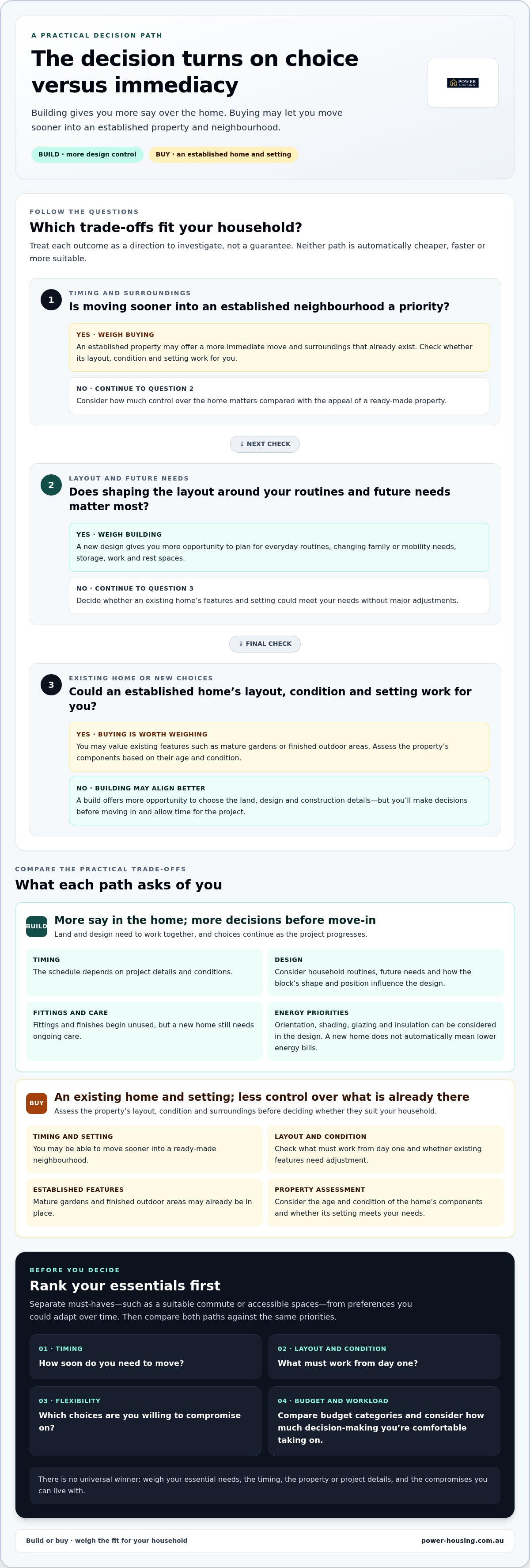
The central trade-off is choice versus immediacy. Building gives you the opportunity to shape a home around your household’s needs. Buying means choosing from homes and surroundings that already exist. If you’re asking “why build new home instead of buy”, weigh how much control over the home matters against the appeal of moving into an established place.
Building means making decisions about land, design and construction before you move in. Buying means assessing an established home’s layout, condition and setting. Neither route is automatically cheaper, faster or more suitable. The right fit depends on your priorities, project details, circumstances and comfort with decisions along the way.
Build: Commission a new home and make decisions about the land, design and construction before moving in.
Buy: Purchase an established property and assess the home, its condition and its existing surroundings.
What changes when you build rather than buy?
A build asks you to make choices before you can experience the finished home. You’ll consider how the land and design work together, then make decisions as the project progresses. The process of house building involves planning, design and construction, so it differs from selecting a completed property. Both routes have considerations to manage, and neither is risk-free.
Which home-buying priorities matter most?
Rank what matters most to your household: timing, location, layout, condition and flexibility. Separate essentials, such as a suitable commute or accessible spaces, from preferences you could adapt over time, such as a particular finish or room arrangement.
- Timing: How soon do you need to move?
- Layout and condition: What must work from day one?
- Flexibility: Which choices are you willing to compromise on?
Think beyond your current routine. A layout that suits your household today may need to work differently as family, work or mobility needs change. An established setting may also be a priority that a new design alone can’t provide. Being clear about these trade-offs makes the comparison more practical and personal.
Next, compare timing, design control, property condition and budget categories. Consider how much decision-making you’re comfortable taking on, too. For a build, account for the choices involved in matching land and design, and remember that schedules depend on project details and conditions. For an established home, assess whether its existing features and setting meet your needs without major adjustments.
There’s no universal winner. Use your essential needs as the filter, then weigh preferences that could change over time. That gives you a clearer basis for comparing the benefits and compromises of each path.
What can building a new home give you that an established home may not?
A new build gives you more opportunity to make the home work for the way you live. You might plan a quieter spot for working from home, easier pathways for changing mobility needs or storage where your household uses it most. The value isn’t customisation for its own sake. It’s the chance to prioritise everyday needs rather than adapt entirely to someone else’s choices.
How does custom design support everyday living?
Start with your routines. Think about where bags collect, how people move between the kitchen and living areas, and whether someone needs a calm place to work or rest. Then consider what may change: children growing up, relatives visiting or a home office becoming more important. Custom home design can help turn those priorities into practical layout choices.
Land and design need to work together. A block’s shape and position can influence where rooms, windows and outdoor areas make sense, so consider the site alongside the floor plan. A tailored house and land package brings those considerations into the same planning conversation, helping align land selection with a home design suited to your requirements.
Can a new home reduce early maintenance concerns?
With a new home, fittings and finishes begin unused rather than carrying an established history of wear. That may give you a clearer picture of what you’re moving into, but it doesn’t mean the home will be maintenance-free. Materials still need care, and upkeep depends on what’s installed and how the home is used.
An established property may already have mature gardens, finished outdoor areas or features you value. Its components may also need careful assessment based on age and condition. A new home shifts the balance: you can choose finishes and components, but you’ll need to make decisions before construction and allow time for the build.
You can also make energy efficiency a design priority. Consider how orientation, shading, glazing and insulation could support your comfort and energy goals. The right choices depend on the block, design and household, so don’t assume a new home automatically means lower energy bills. Discussing these priorities early helps bring them into decisions about room use, natural light and day-to-day comfort.
Think about how you’ll use each space throughout the year, not just how it looks on a plan. A well-considered design connects household routines with the block and the features you value, giving you a clearer basis for making choices. If a home shaped around your household sounds right, explore tailored house and land packages that bring land selection and custom design assistance together.
Building versus buying: how do timing, budget and certainty compare?
Building offers more influence over the home, but it also asks for more planning and patience before you can move in. Buying an established property may bring you closer to a move, although the home’s condition and any changes you want to make can add decisions of their own. Neither path is automatically cheaper or more predictable. Compare the practical trade-offs with your circumstances.
| Consideration | Building a new home | Buying an established home |
|---|---|---|
| Move-in timing | Move-in follows planning, approvals, construction and completion. The schedule depends on the project and conditions. | Timing depends on the purchase and settlement process, and when the property is available to occupy. |
| Design control | You can make design choices to suit your requirements, within the project’s scope. | You choose from existing layouts and features, with changes requiring separate consideration. |
| Property condition | Components and finishes are new, but the home will still need ongoing care. | Condition varies, so consider the home’s age, upkeep and potential repair or renovation needs. |
| Decision workload | Expect decisions about land, design and construction along the way. | Focus on assessing the property and deciding whether its existing features suit you. |
Which costs and financial variables should you compare?
Compare budget categories, not just a headline figure. For a build, consider land, design and construction, along with project-related requirements. For an established home, include the purchase transaction and any repairs or renovations you may want to make. The Australian home-building cost guide can help you identify categories to investigate without assuming one budget suits every project.
Finance structures differ, and lenders set their own assessment criteria and loan conditions. Grants, concessions and duties can also depend on your circumstances and the state or territory. Check current information from the relevant official government source before including assistance or charges in your calculations.
How do timing and uncertainty differ between the two options?
A build progresses through planning and approvals, construction, and completion. Approvals, site conditions or changes to requirements can affect the schedule, so avoid relying on a fixed completion assumption. An established-home purchase follows a different sequence, including contract and settlement steps, with timing shaped by the transaction and agreed arrangements.
That uncertainty is an important consideration when building, so make a realistic plan. Allow room for decisions and possible changes, and think about how you’ll manage your living arrangements while the project progresses. Buying may suit you better if moving into an available home is the priority. If you’re weighing why build new home instead of buy, compare the whole budget, expected timing and decision workload, not just the appeal of a finished design.
How to decide whether building or buying suits your situation
Make the choice against your household’s real plans, not just the first home that catches your eye. Ask what must be true for you to feel settled, then compare each path against those needs. This four-step process can turn “why build new home instead of buy” into a decision based on priorities rather than assumptions.
- Rank your priorities. List what matters most, such as location, layout, condition, outdoor space or design input. Mark each as essential or preferred. A feature that would be lovely to have shouldn’t outweigh a non-negotiable need, such as a suitable commute or room for a family member.
- Assess your timing. If you need to move by a particular point, consider whether an already-built property better suits your circumstances. A build involves planning and construction before move-in, so consider how you’d manage the wait and any changes to your living arrangements.
- Compare budget categories. Look at the full picture for both options. For a build, consider land and construction alongside project requirements and the decisions involved. For an established home, account for the purchase and any changes or upkeep you may take on. Compare like with like instead of relying on an early estimate or first impression.
- Review your flexibility. Decide where you can adapt. Would you accept a different layout to move sooner, or would a home that doesn’t suit your routines frustrate you over time? Consider how your needs may change, too.
When might buying an established home make more sense?
Buying can suit you if moving sooner is a priority or if you’re drawn to an existing home and its established surroundings. You can assess the actual layout and setting before deciding. Look at whether the rooms work for your household, the property’s condition and whether changes are needed. An established home may already fit well; renovation isn’t a given.
When might a new build better match your priorities?
A build may suit you if design input matters, you want a new-home starting point or you’d like land choices considered alongside the home design. Allow realistic time for planning and construction, and be ready to make decisions along the way. Before settling on a block, consider how its shape and features could affect the home you have in mind. A guide to choosing a block can help you assess those factors.
Test your preferred option against a typical week, not just an idealised future. Picture the school run, work-from-home days, visitors and the spaces your household uses most. If building remains the stronger fit, explore tailored house and land options that bring land selection and home design into the same planning conversation.
Planning your new-home path with a tailored house and land package
If building suits your priorities, a tailored house and land package can provide a practical starting point. It brings land selection and home design into the same planning conversation rather than treating them as unrelated choices. That connection matters: a design that suits your household still needs to make sense for the block you’re considering.
What does a coordinated land and design approach involve?
A block’s characteristics can influence which home design is suitable. Its shape, slope, access and surrounding features may affect the home’s position, room layout and outdoor areas. Your household’s routines also shape design priorities, from shared living spaces to quiet areas for work or rest. Considering both together gives the planning process a clearer direction.
Start by separating must-haves from preferences. You might prioritise a layout that gives everyone room to work or study, while staying flexible about finishes. Then consider the land alongside those requirements. A design discussion can focus on how the home and block work together, instead of choosing a plan without considering the site.
A tailored package isn’t a substitute for thinking through the details. It brings land and design choices together early, so your household needs can inform the conversation. Power Housing coordinates land selection with residential home design and provides custom home design assistance to help align a new home with your requirements. The tailored house and land package guide offers another starting point for understanding this approach.
What is a useful next step after choosing to build?
Turn your decision into a short planning brief. Keep it practical and specific enough to guide early discussions, without locking yourself into choices before you understand the options.
- Household needs: Note who will live in the home and the routines its layout should support.
- Design priorities: Identify essential spaces and features, then list preferences you could reconsider.
- Land considerations: Record what matters about the block and how it may affect your preferred home design.
- Future plans: Consider how changing work, family or accessibility needs could influence the home over time.
This brief can help clarify “why build new home instead of buy”. If design input and coordinating land with a suitable home matter to you, a tailored build may fit your plans. Power Housing assists with tailored house and land packages and custom design, connecting household requirements with land and home-design choices.
Explore tailored house and land options
Take the next step with confidence
Before committing to a direction, write a short brief for your future home. Note the needs that won’t change, the preferences you’re open to adjusting and the questions you still need to resolve. This gives you a practical reference as you compare possibilities and keeps the decision grounded in your household’s plans.
There’s no universal answer to “why build new home instead of buy”. The right choice fits how you want to live and the decisions you’re ready to take on. If building is your preferred path, Power Housing’s custom home design assistance can help align a home with your requirements, alongside tailored house and land packages.
When you’re ready to take the next step, explore tailored house and land options. A clear brief can make the journey ahead feel more manageable and help your plans take shape.
Frequently Asked Questions
Can I live in my current home while a new home is being built?
Yes, you can remain in your current home during construction if you’re able to continue living there. Planning the overlap can reduce pressure to move before the new home is ready. Map out likely handover dates alongside any lease end date, school terms, work commitments and storage needs. If you expect to sell your current home, include that decision in your broader timing and cash-flow plan.
How long does it usually take to build a new home in Australia?
There isn’t one timeframe that applies to every Australian build. The schedule depends on the project, approvals, site conditions, design decisions and construction progress. Rather than plan around a single assumed completion date, map the key stages and consider what you’ll do if they take longer than expected. If you have a deadline, such as a lease ending, build flexibility into your moving arrangements.
Do first-home buyer grants apply when building a new home?
They may, but eligibility and grant conditions depend on the scheme and your circumstances. Australian first-home buyer assistance can differ between states and territories, and rules may distinguish between building, buying a new home and purchasing an established property. Check current information from the relevant state or territory government before relying on a grant in your plans. Treat potential assistance as conditional until your eligibility is clear.
Can I buy land before deciding on a home design?
Yes, but consider the block’s characteristics before committing to a design or purchase. A sloping or unusually shaped block, for example, may influence where a home can sit and how its rooms connect to outdoor areas. Also consider access and nearby features. A shortlist of household requirements can help you assess whether a block could suit your plans, even if you haven’t settled on a floor plan.
Is financing a new build different from buying an established home?
It can be. Some construction loans release funds in stages as work reaches agreed milestones, while finance for an established property generally relates to its purchase and settlement. Loan structures and assessment criteria vary between lenders, so consider how repayments and available funds may work across the relevant stages. Allow for the possibility that your financial position or project details could change during the process.
Do new homes in Australia come with a builder’s warranty?
Protections for building work depend on the state or territory, the type of work and the circumstances. Don’t assume that one warranty period or set of conditions applies across Australia. Review the building contract for its written warranty terms, and check the relevant state or territory building regulator’s guidance on statutory protections. Keep copies of contracts, plans, variations and handover documents together for future reference.
What happens if my needs change after I have chosen to build?
Changes may still be possible, but their effect depends on when you request them, the design and project stage, and the agreements in place. A change to room use may affect layout decisions, while a late change can have different implications from one raised during design. Write down what has changed and why, then assess its impact on design, approvals, timing and budget before deciding how to proceed. If you’re weighing why build new home instead of buy, consider how much flexibility your plans may need.


