

Could your stamp duty exemptions change depending on which state you buy in, or whether you purchase a home, vacant land or a house-and-land package? They can. Each state and territory sets its own rules, and the structure of your purchase may affect how duty is assessed.
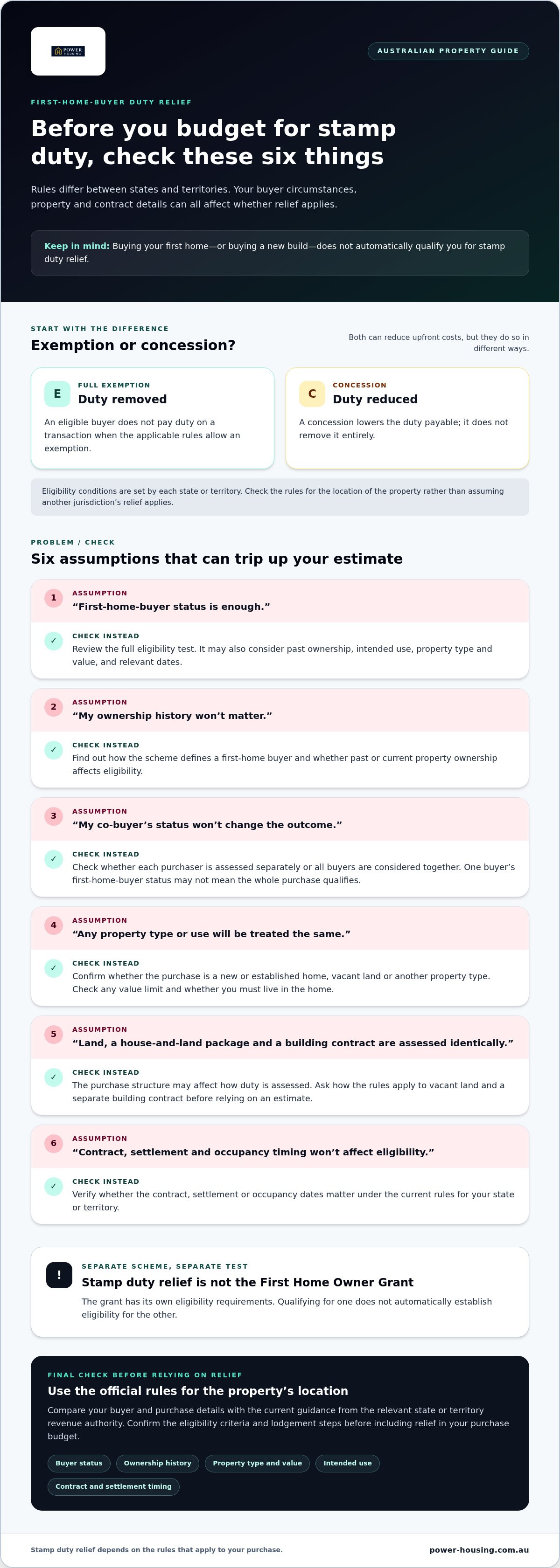
If you’re unsure whether first-home-buyer relief applies to you, start by checking your ownership history, the property’s value and type, how you plan to use it, and when the contract is signed. An exemption generally removes duty that would otherwise be payable; a concession reduces it.
This guide explains how the 2026 rules differ across states and territories, who may qualify, and what to check with the relevant revenue authority before committing. It also covers why vacant land, a house-and-land package and a separate building contract may be treated differently, so you can factor possible duty into your new-home plans with greater clarity.
Key Takeaways
- Understand the difference between a full exemption and a concession when estimating upfront costs.
- Check how stamp duty exemptions vary by state or territory, property type, value and buyer circumstances.
- Review ownership history, intended residence and contract timing before assuming first-home-buyer relief applies.
- Compare how vacant land, an established home and a separate building contract may be assessed in a house-and-land purchase.
- Gather your contract and eligibility details, then confirm current requirements and lodgement steps with the relevant revenue authority.
Stamp duty exemptions in Australia: what relief can cover
Stamp duty is a tax on certain property transfers, usually paid when ownership changes hands. An exemption removes the duty when the applicable rules allow it, while a concession reduces the amount payable.
Often called transfer duty, stamp duty is an upfront cost to include when planning a property purchase. The name and details of the tax differ by jurisdiction. For general background on how it applies around the country, see Stamp duty in Australia.
What does a stamp duty exemption mean?
A stamp duty exemption means an eligible buyer doesn’t have to pay duty on a particular transaction. The exemption must be provided for under the relevant legislation, and both the buyer and purchase must meet the stated conditions. Buying a home, or buying for the first time, doesn’t make an exemption automatic.
A concession is different: it lowers the duty payable rather than removing it entirely. Depending on the scheme, the amount of relief may depend on the buyer’s circumstances, the property’s value or type, or how it will be used. When estimating upfront costs for a new build or house-and-land purchase, check whether the scheme offers a full exemption or a partial reduction.
Why are stamp duty rules different across Australia?
Australian states and territories set and administer their own property duty rules. There’s no single national exemption that applies to every homebuyer. Each jurisdiction determines which transactions qualify, what conditions buyers must meet, and how to claim available relief.
First-home-buyer status alone doesn’t establish eligibility. A scheme may also consider whether you’ve owned property before, whether you’ll live in the home, the property type and value, and the contract or settlement timing. The combination of conditions varies, so don’t assume relief available in one state or territory applies in another.
Start with the revenue authority for the state or territory where the property is located. Its official guidance sets out current rules, eligibility criteria and application steps. This is particularly important when a purchase involves vacant land and a separate building contract, as the transaction structure may affect how duty is assessed.
Use duty eligibility as an early planning checkpoint. Knowing what relief may be available can help you estimate upfront costs while coordinating land selection and home design.
Who may qualify for stamp duty exemptions or concessions?
Eligibility depends on the rules where you’re buying and the details of your purchase. A first-home buyer looking at a newly built home, for example, still needs to meet the relevant scheme’s criteria. A new build or first property purchase doesn’t guarantee relief.
Use the points below as a checklist when researching your eligibility. Definitions, thresholds and conditions vary and can change, so compare your circumstances with the current guidance from the relevant state or territory revenue office before relying on an exemption or concession.
Which buyer and property details can affect eligibility?
Start by checking how the scheme defines a first-home buyer and what ownership history it considers. Then review the property’s intended use, value and type. Some schemes may require you to live in the home or set value limits. The exact thresholds and residency conditions depend on the jurisdiction, so verify them against current official rules.
- Buyer status: Does the scheme assess each purchaser separately or consider all buyers together?
- Ownership history: Could past or current property ownership affect your eligibility?
- Intended use: Must the property become your principal place of residence, and do occupancy conditions apply?
- Property details: Is the purchase a new or established home, vacant land, or another property type? Does its value fall within any applicable limit?
- Timing: Could the contract, settlement or occupancy dates affect your application?
Pay particular attention to co-buyers. If you’re purchasing with a partner or another person, check how the scheme treats each buyer’s eligibility and ownership history. One buyer’s first-home-buyer status doesn’t necessarily mean the whole purchase qualifies. Joint application rules vary, so verify how they apply to your transaction.
Do first-home buyers automatically receive an exemption?
No. First-home-buyer status is only one possible part of the eligibility test. Relief may also depend on the jurisdiction, prior ownership, who is buying, the property’s type and value, intended use, and relevant dates. Check every condition that applies to your circumstances before including relief in your purchase budget.
Also distinguish stamp duty relief from the First Home Owner Grant (FHOG). The grant is a separate scheme with its own eligibility requirements. Qualifying for one doesn’t automatically establish eligibility for the other.
For a new build, consider duty checks alongside land selection and home design decisions. Explore tailored house-and-land packages to plan those parts of your purchase together while you verify potential duty relief through official guidance.
Compare stamp duty exemptions across states and territories
Stamp duty exemptions and concessions don’t follow one national test. The same buyer and purchase could receive different treatment depending on where the property is located, whether it’s a home or vacant land, and the rules in force when the contract is made or settled.
This table identifies broad relief categories to investigate, not a guarantee that a particular buyer or property qualifies. Check current conditions and thresholds with the relevant authority. A concession reduces duty; it isn’t the same as a full exemption.
| State or territory | Relief type to investigate | Key checks before relying on it | Official authority |
|---|---|---|---|
| ACT | First-home-buyer and other targeted relief | Confirm buyer criteria, eligible property types, occupancy rules and current conditions. | ACT Revenue Office |
| New South Wales | First-home-buyer assistance | Check whether the purchase is a home or vacant land, along with current value limits and buyer requirements. | Revenue NSW |
| Northern Territory | Eligible new-home and house-and-land relief | Verify package eligibility, contract timing and any principal-residence requirements. | Territory Revenue Office |
| Queensland | First-home-buyer relief for new homes, land or established homes | Confirm the property category, buyer criteria and applicable value conditions. | Queensland Revenue Office |
| South Australia | First-home-buyer relief for new homes or land | Check new-home requirements, land conditions and eligibility criteria. | RevenueSA |
| Tasmania | First-home-buyer relief and other targeted concessions | Verify current scheme availability, settlement timing and property conditions. | State Revenue Office Tasmania |
| Victoria | First-home-buyer and other targeted relief | Check buyer status, property value, type and any current scheme dates. | State Revenue Office Victoria |
| Western Australia | First-home-buyer relief and off-the-plan concessions | Confirm whether the rules cover a home, vacant land or an eligible off-the-plan purchase. | RevenueWA |
Checked date: 7 October 2026. Thresholds, property types and detailed conditions should be checked against the relevant authority’s current official rules. Schemes can change, so reconfirm the details before signing or settling.
How can buyers verify their state or territory rules?
Start with the revenue office for the property’s jurisdiction. Have the purchase type, buyer and co-purchaser details, ownership history, intended use, contract date and relevant contract documents ready. For a land-and-build arrangement, check whether the land contract and building contract are assessed separately under the applicable rules.
If ownership history, joint buyers or the contract structure makes your situation complex, consider professional tax or conveyancing advice. Use the authority’s guidance to understand possible duty before finalising your new-home plans.
How to check eligibility and apply for stamp duty relief
Check the rules before committing to a purchase. The process for claiming stamp duty exemptions or concessions differs between states and territories, as can the person responsible for lodging an application. Use the relevant revenue authority’s current guidance to confirm the criteria, documents, deadlines and lodgement steps for your transaction.
Work through these checks in order:
- Identify the jurisdiction: Use the property’s location to find the relevant state or territory revenue office.
- Review the scheme: Check the buyer, property and use requirements, including rules for co-purchasers.
- Gather supporting records: Compare the authority’s document list with your circumstances.
- Confirm timing: Check how contract, transfer and settlement dates affect eligibility and when an application must be lodged.
- Follow the lodgement process: Confirm who submits the claim, how it’s lodged and whether further information may be required.
Which documents might a buyer need?
Requirements vary, so treat these as examples to help you prepare, not as a mandatory nationwide checklist. Depending on the scheme, relevant records may include identification, the signed purchase contract, information about previous property ownership, and details showing how you intend to occupy the home. The revenue authority may request other evidence under its rules.
For a house-and-land purchase, keep the land contract and any separate building contract available. Reviewing both can help clarify the purchase structure when you check how duty is assessed. Follow the authority’s document list to determine what you need to supply.
When should stamp duty eligibility be checked?
Start researching before signing a contract. Timing can affect which rules apply, and requirements may relate to the contract, transfer, settlement or application stage. Check the exact deadlines and lodgement steps with the relevant authority rather than assuming the process is the same across Australia.
Review the contract structure and expected settlement dates together. If the purchase involves separate land and building arrangements, check how those documents fit the applicable rules. For complex ownership histories or co-purchasers, professional tax or conveyancing advice may help you understand the requirements.
Quick checklist:
- Find the revenue authority for the property’s jurisdiction.
- Check the scheme criteria against every buyer and the purchase type.
- Gather relevant identity, contract, ownership and occupancy records.
- Verify deadlines, lodgement responsibility and any further evidence required.
As you plan the land and home design together, explore tailored house-and-land packages and include duty checks in your upfront purchase planning.
Stamp duty exemptions for new homes and house-and-land packages
A new home doesn’t automatically mean no stamp duty. Relief depends on the rules in the state or territory where you buy, your eligibility and the transaction being assessed. A first-home buyer purchasing vacant land may face different conditions from someone buying an established home or acquiring land with a separate building contract.
Some jurisdictions specifically include new-home purchases or vacant land in certain first-home-buyer schemes. For example, Queensland’s current rules provide full relief for eligible first-home buyers purchasing a new home or vacant land under qualifying contracts, while South Australia’s first-home-buyer exemption covers new homes and qualifying vacant land for a new build. These are jurisdiction-specific examples, not a national rule. Check current requirements with the relevant revenue authority before relying on them.
Does a house-and-land package qualify for an exemption?
It may qualify for relief in some circumstances, but the label “house-and-land package” doesn’t determine the duty outcome. The authority may consider what’s being transferred and how the agreements are structured. For example, a land contract and a separate building contract may need to be assessed under the rules that apply to those specific documents.
Before signing, compare the contracts, buyer details, property type and relevant dates with the current official guidance. If the arrangement is complex, a qualified tax or conveyancing adviser can help interpret how the rules apply. Don’t assume that bundling land and construction automatically changes the duty payable, or that a scheme covering new homes applies to every vacant-land purchase.
Plan a new-home purchase with clearer cost assumptions
Build duty research into your early planning. It can help you compare land options and understand possible upfront costs before settling on a design. Consider the land you select, the structure of the purchase and the home design together, as each can shape the questions you need answered about duty.
As you shape your budget, include possible duty alongside other purchase and build costs, but don’t treat relief as confirmed until you’ve checked the current criteria and process. For a house-and-land purchase, review the land and building documents together and verify how the relevant jurisdiction treats them.
Planning a new home can be clearer when land selection and design decisions are considered together. Explore tailored house and land packages as you map out your purchase and build plans.
Plan your new-home purchase with confidence
Stamp duty exemptions depend on more than being a first-home buyer. Rules vary by state and territory, and eligibility can turn on your ownership history, intended use and property details. For a house-and-land purchase, the land and building contracts may also affect how duty is assessed.
Before signing, check current requirements with the relevant revenue authority and confirm the documents, deadlines and lodgement process for your circumstances. Include possible duty in your upfront planning without assuming a concession or exemption will apply.
With the duty details in view, you can make more informed decisions about land and home design. Explore tailored house and land packages as you take the next step towards your new home.
Frequently Asked Questions
Is stamp duty the same as transfer duty?
Usually, both terms refer to tax associated with transferring property ownership, but the terminology differs across Australia. The relevant state or territory authority administers the rules, and there’s no single national exemption scheme. Check the official wording and requirements for the jurisdiction where the property is located. Similar terms can refer to relief with different eligibility conditions, application steps or treatment of a particular purchase.
Can first-home buyers get a stamp duty exemption in Australia?
Yes. Some jurisdictions offer first-home buyers an exemption or concession if they meet the applicable conditions. Eligibility may depend on buyer status, previous property ownership, property type or value, and whether you’ll live in the home. First-home-buyer status alone doesn’t guarantee relief nationwide. Check the current criteria with the relevant state or territory revenue office before signing or including an assumed exemption in your purchase budget.
Do stamp duty exemptions apply to vacant land?
They can, but vacant land may be assessed differently from an established or newly built home. The rules depend on the jurisdiction, your eligibility and, in some schemes, what you plan to build or how the land will be used. Don’t assume an exemption for a home also covers land. Check the current land-specific criteria and contract requirements with the relevant revenue authority before relying on possible relief.
Does buying a house-and-land package mean I pay no stamp duty?
No. A house-and-land package doesn’t automatically qualify for an exemption. The location, buyer circumstances, land transaction and contract arrangements can all affect how duty is assessed. A land contract and a separate building contract may receive different treatment under local rules. Check the relevant state or territory authority’s guidance and have the specific purchase documents reviewed before estimating duty or assuming an exemption will apply.
How do I apply for a stamp duty exemption?
Start with the revenue authority for the state or territory where the property is located. Review its current eligibility criteria, required evidence, application process and deadlines. Keep relevant purchase and ownership records ready, such as the contract and information about prior property ownership, and follow the authority’s specific document list. Lodgement responsibility and timing vary. Don’t treat relief as approved until the application has been assessed or confirmed through the proper process.
What is the difference between a stamp duty exemption and a concession?
An exemption generally removes duty when the transaction and buyer meet specific legal conditions. A concession usually reduces the duty payable rather than removing it completely. The terms used and eligibility rules vary between states and territories, and schemes may describe relief differently. Check the relevant authority’s current definitions and criteria to understand what type of assistance may apply to your purchase and whether conditions continue after settlement.
Can stamp duty rules change after I sign a contract?
Yes. Rules and administrative requirements can change, but the effect on your purchase depends on the jurisdiction, legislation and any transition provisions. Contract dates may be relevant. Don’t assume a later change will apply to an earlier agreement or alter your eligibility. Check the revenue authority’s current guidance if rules change during your purchase, and consider qualified tax or conveyancing advice if you need to understand how a change affects your specific contract.


