

What if the progress-payment stages in your building contract don’t line up with the funds your lender is ready to release? A construction loan progress payments schedule is a cash-flow sequence shaped by your approved loan and contract, not a universal template. Builders commonly claim at milestones such as the base, frame, lock-up and completion, while lenders may require documents or inspections before each drawdown.
It’s understandable to want certainty about when the builder gets paid, particularly if a claim is delayed, disputed or higher than the amount available from your loan. Understanding the usual process can help you spot gaps early and ask clearer questions before signing.
This guide explains how construction loan drawdowns typically relate to building milestones, what can vary between lenders and contracts, and which documents and timing details to confirm. You’ll also learn how to prepare for possible delays or shortfalls and keep your lender, builder and home plans in step. Coordinating land, design and build decisions early can help you prepare for those conversations.
Key Takeaways
- Map the lender’s release conditions against the builder’s claim milestones using your construction loan progress payments schedule.
- Check that stage names, payment triggers and required evidence align across your building contract and loan approval.
- Allow for lender review and any required inspection when planning payment dates, and confirm how to track each claim.
- Ask your lender and builder what happens if a claim is delayed, disputed or higher than the approved drawdown.
- Coordinate land, design and build planning early so you can prepare informed questions before signing.
What does a construction loan progress payments schedule actually show?
A construction loan progress payments schedule sets out the agreed sequence and conditions for releasing loan funds as a build advances. It connects the builder’s payment requests with the lender’s approval process, showing what needs to happen before funds can be accessed. It isn’t a universal national template: your signed building contract and lender’s approval documents establish the arrangements for your project.
In short, it’s the project-specific plan linking building progress, payment claims and the lender’s release of approved funds. The documents may specify milestones, evidence, inspection requirements, submission steps and where an approved payment goes. Read them together rather than assuming a familiar stage name means the same thing in every agreement.
Progress claim, drawdown and payment: what is the difference?
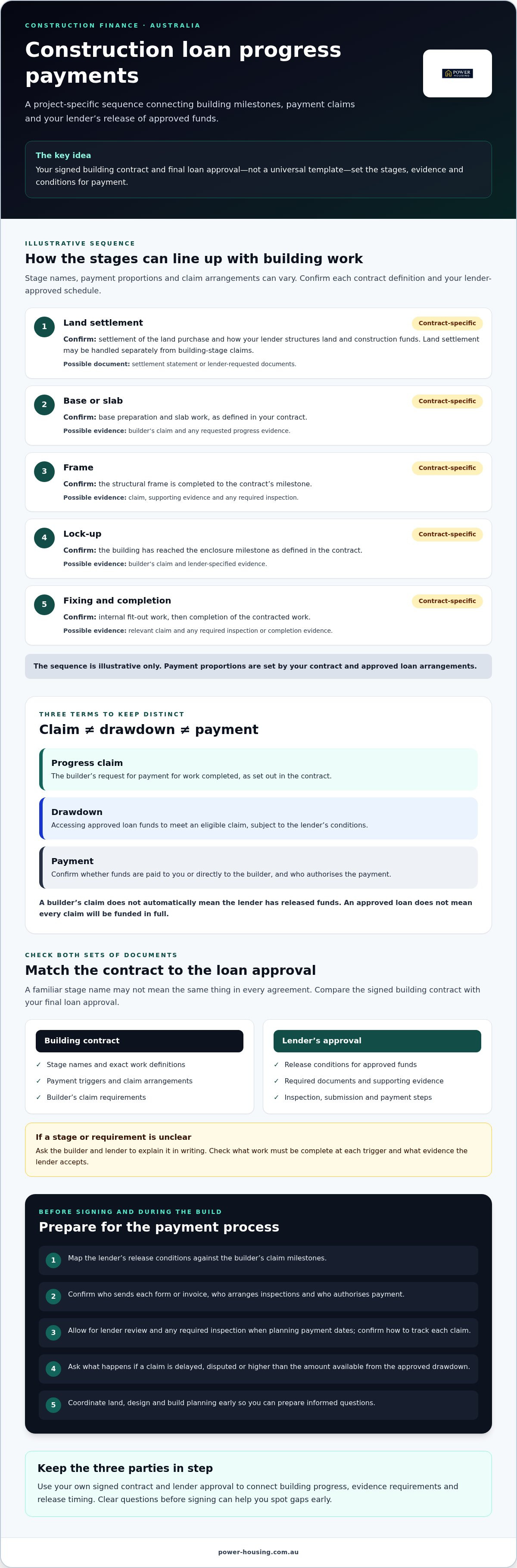
A progress claim is the builder’s request for payment for work completed, as set out in the contract. A drawdown is the process of accessing approved loan funds to meet an eligible claim, subject to the lender’s conditions. A builder’s claim doesn’t automatically mean the lender has released funds, and an approved loan doesn’t mean every claim will be funded in full.
Confirm who sends each form or invoice, who arranges any inspection and who authorises payment. Check whether funds are paid to you or directly to the builder. Some construction finance arrangements refer to initial construction funding, but don’t assume that term describes your lender’s process. Check your own loan documents to confirm what happens first and what evidence is required.
Why construction loan schedules are not all identical
Schedules can vary with the building contract, lender conditions and project type. Agreements may use different milestone descriptions, payment proportions or claim arrangements. A contract’s wording may not match the labels on a lender’s forms, so check what work must be complete at each trigger and what evidence the lender accepts.
Compare the signed contract with your final loan approval before relying on a payment timeline. If a milestone or requirement is unclear, ask the builder and lender to explain it in writing. Your documents, not a general example or another borrower’s schedule, determine the process to follow.
How Australian construction loan drawdown stages usually align with building work
A construction loan drawdown may follow the project from land settlement through to practical completion, with funds accessed as agreed stages are reached. The sequence below is illustrative only. Some contracts use different stage names, proportions or claim arrangements, so treat every payment percentage as contract-specific and check your lender-approved schedule.
What happens at common building progress milestones?
Milestones describe work, but their exact meaning depends on the building contract. A slab claim may relate to the base being prepared and poured; frame to the home’s structural frame being erected; and lock-up to the building reaching an enclosed stage. Fixing generally covers internal fit-out work, while completion relates to finishing the contracted work. Check the contract’s precise definitions before treating a stage as achieved.
Land settlement may be part of the overall funding plan, but it can be handled separately from building-stage claims. Confirm how your lender structures the land and construction funds.
| Illustrative stage | Work or event to confirm | Possible supporting document | Payment proportion |
|---|---|---|---|
| Land settlement | Settlement of the land purchase | Settlement statement or lender-requested documents | Contract-specific |
| Base or slab | Base preparation and slab work, as defined in the contract | Builder’s claim and any requested progress evidence | Contract-specific |
| Frame | Structural frame completed to the contract’s milestone | Claim, evidence and any required inspection | Contract-specific |
| Lock-up | Enclosure milestone reached as defined in the contract | Claim and lender-specified evidence | Contract-specific |
| Fixing and completion | Fit-out work, then contracted work completed | Relevant claim and any required inspection or completion evidence | Contract-specific |
What does a lender check before releasing a drawdown?
Before building starts, ask your lender which invoice or claim form is required at each stage, what evidence proves the milestone is complete, and whether an inspection is needed. Conditions may specify who can inspect the work and how findings must be submitted. Don’t assume the builder’s claim alone meets every requirement.
Incomplete paperwork or an inspection still to be arranged can affect processing time. Confirm submission methods, who coordinates each check and how much time to allow. Processing times can vary, so don’t rely on a fixed turnaround. Keep a copy of each claim and confirmation of payment to track what has been submitted and released.
Early coordination of land, design and build details can help you prepare focused questions for your lender and builder. Learn about tailored house and land packages as part of planning your new-home journey.
Compare the building contract schedule with your construction loan approval
Before signing or starting construction, read the payment schedule in your building contract alongside the conditions in your loan approval. The construction loan progress payments schedule works best when the builder’s claim trigger and the lender’s release requirements can be reconciled. Similar milestone labels don’t necessarily mean the same work, evidence or timing is required.
Compare the documents side by side to spot gaps. They may use different terms, so treat the table below as a comparison guide, not a standard lender or contract template.
| What to compare | Building contract | Loan approval or lender conditions |
|---|---|---|
| Milestone and trigger | What work must be complete before the builder can claim? | Does the lender recognise that stage, and what must be verified? |
| Claim amount and deadline | What amount is due, and when must you pay after receiving the claim? | Are sufficient approved funds available, and when must the drawdown request be submitted? |
| Evidence and documents | What claim, invoice or supporting information does the builder provide? | What forms, evidence or signatures does the lender require? |
| Inspection or valuation | Does the contract say anything about access or milestone confirmation? | Is an inspection or valuation required, who arranges it, and who can carry it out? |
| Timing and exceptions | What applies to late, varied or disputed claims? | What processing time should you allow, and how are issues or shortfalls handled? |
Which schedule details should you check before signing?
Check each milestone’s wording, payment amount, claim deadline and supporting documents. Confirm whether lender inspections or valuations are needed, who books them and how much notice is required. Ask both parties how variations, construction delays and disputed claims affect payment dates or the amount eligible for a drawdown.
Look for practical mismatches. For example, the contract may require payment after a stated milestone, while the lender requires an inspection or additional evidence before releasing funds. Find out how that gap will be managed before a claim is due.
What if a builder claim and lender stage do not match?
Raise the difference with both the builder and lender before accepting the schedule or submitting a claim. Ask each to explain the relevant condition and confirm in writing which documents, approvals and timing apply. Confirm any mismatch in writing before construction or claims begin.
If the issue remains unclear, seek independent legal advice about the building contract or independent financial advice about your lending concerns. Clear answers upfront can help you plan cash flow and avoid relying on assumptions when a payment falls due.
Prepare for each building progress payment and reduce avoidable delays
A repeatable process helps you track each claim from the builder’s notice through to payment. Use the construction loan progress payments schedule and your lender’s instructions as reference points, allowing time for document review or an inspection. Processing times can vary, so ask your lender how much time to allow rather than relying on a fixed turnaround.
A practical checklist before submitting a progress claim
Before the first claim, confirm: the milestone definition, required claim and invoice, supporting evidence, inspection arrangements, submission method, lender contact and builder contact. Keep the answers with your loan and contract documents.
- Receive the builder’s notice. Check the claim amount, due date and milestone against the signed building contract.
- Verify the work. Confirm the relevant stage is complete as defined in the contract. Raise any discrepancy with the builder before submitting the claim.
- Prepare the documents. Gather the builder’s claim or invoice and the progress evidence, forms and signatures specified in your lender’s approval conditions.
- Submit the drawdown request. Follow the lender’s process and arrange any required inspection. Keep copies of everything sent.
- Track the review and payment. Record submission dates, reference numbers, follow-ups and written confirmations. Check with the lender when funds are released and confirm with the builder that payment has been received.
How to respond to a delayed or queried drawdown
If a drawdown is delayed or queried, contact the lender promptly. Ask whether documents are missing, an inspection is outstanding or the claim needs clarification. Note the response and next steps. Keep the builder informed, and check the contract for notice and payment requirements rather than assuming a delay changes them.
If the issue isn’t resolved through the usual contact, use the lender’s formal support and complaints channels. A cash-flow buffer may help manage timing differences, but the appropriate amount depends on your circumstances. Seek independent financial advice about your own position.
Coordinating land, design and build details early can help you prepare practical questions before claims begin. Find out more about tailored house and land packages.
Connect your loan schedule with a well-coordinated new-home build
A clear construction loan progress payments schedule is one part of a well-planned build. Before moving ahead, confirm your lending arrangements, reconcile the signed building contract with your lender’s conditions, and agree how progress claims and updates will be communicated. Keep the latest versions of your documents together so you and the relevant professionals are working from the same information.
Questions to resolve with your lender and builder
Use these questions to close any gaps before a claim is due:
- How do I request access to approved funds, and which forms, invoices or evidence must be supplied?
- Are inspections required, who arranges them, and who can complete them?
- What are the claim submission deadlines, and what processing window should I allow?
- Are funds paid to me or directly to the builder, and how will payment be confirmed?
- What steps apply if there’s a variation, delay, incomplete stage or disputed claim?
Ask the lender and builder separately, then compare their answers. If a requirement or responsibility isn’t clear, request written clarification. For concerns about the contract or lending arrangements, seek advice from an appropriately qualified independent professional.
Where house-and-land planning fits into the finance conversation
Land selection and home design shape the project you’ll discuss with your lender and builder. They influence what needs to be documented, how the build is described and which questions you’ll need answered before agreeing to the payment process. Share your chosen project details with your lender and relevant professionals so they can explain how their requirements apply to your circumstances.
Power Housing coordinates tailored house and land packages and assists with custom home design. It isn’t a lender, mortgage broker or financial adviser, but early coordination of land, design and build planning can help you prepare informed questions for the people managing your finance and construction arrangements.
With the key documents reconciled and communication planned, you can approach the next steps with greater clarity. Explore tailored house and land planning with Power Housing.
Plan your build with greater confidence
A reliable construction loan progress payments schedule is specific to your signed building contract and lender approval, not a one-size-fits-all template. Check that milestone triggers, evidence requirements and payment steps align before claims begin. Then allow time for lender review or inspections, and keep clear records of submissions and confirmations.
These steps can make cash-flow planning more manageable and help you raise questions early with your lender and builder. Land, design and build choices also shape the project details you’ll need to discuss with them.
Power Housing coordinates tailored land and residential home packages and provides custom home design assistance as part of the wider new-home journey. It doesn’t provide lending or financial advice, but early project planning can help you prepare informed questions for the professionals managing those areas.
With clear documents and the right conversations in place, you can move forward with greater clarity and focus on bringing your new home to life. Explore tailored house and land planning with Power Housing.
Frequently Asked Questions
What are the progress payment stages for a construction loan in Australia?
There’s no single stage sequence for every Australian construction loan. A schedule may include land settlement, base or slab, frame, lock-up, fixing and completion, but these are illustrative milestones only. The names, order, payment proportions and claim arrangements depend on your signed building contract and lender approval. Check what work must be complete at each stage, along with the evidence and conditions attached to each release.
How do construction loan progress payments work?
The builder submits a progress claim for work completed under the contract. You then follow your lender’s process to request a drawdown from the approved loan, providing any required invoices, forms or evidence. The lender may review the claim and require an inspection before releasing eligible funds. Check who submits documents, who authorises payment and where funds go. You may pay interest on funds drawn, according to your loan terms.
Are construction loan progress payments the same for every lender?
No. Lenders can set different drawdown conditions, document requirements, inspection processes and payment arrangements. Building contracts can also vary in milestone names, claim triggers and proportions. Don’t rely on a generic construction loan progress payments schedule or another borrower’s experience as your guide. Compare your own loan approval with the signed building contract, and ask the lender and builder to clarify any differences in writing before claims begin.
When does the builder get paid from a construction loan?
The builder is paid after a progress claim is made and the required payment process is completed. Depending on the lender’s arrangements, funds may be released to you or paid directly to the builder. A claim doesn’t automatically mean funds are ready: the lender may first need documents, evidence or an inspection. Confirm the submission steps, payment destination and expected processing window with your lender, and check the contract for the claim’s due date.
What happens if a construction loan progress payment is delayed?
Contact your lender promptly to find out whether documents are missing, an inspection is outstanding or the claim needs clarification. Keep the builder updated, and check your contract for payment dates and notice requirements. Record follow-ups and ask for written confirmation of next steps. If the matter remains unresolved, use the lender’s formal support or complaints process. Consider independent advice if you’re concerned about your contractual or financial position.
Can I change the construction loan progress payment schedule?
Possibly, but don’t change the schedule on your own. A change to the builder’s claim stages or timing may require the builder’s agreement and a written contract variation. It may also affect the lender’s approval or drawdown conditions, so ask the lender what review or updated documents are needed before agreeing. Confirm the revised arrangements in writing with both parties, and seek independent legal or financial advice if you’re unsure of the implications.
Do I need an inspection before every construction loan drawdown?
Not necessarily. Inspection requirements depend on the lender’s conditions and may differ between loan arrangements or stages. Your lender should confirm whether an inspection is needed, who can carry it out, how it’s arranged and what evidence is accepted. Ask before submitting a claim, as an inspection that hasn’t been organised can affect processing. Don’t assume the builder’s progress claim alone will satisfy the lender’s requirements.
What documents do I need for a construction loan progress claim?
Requirements vary, so follow the list in your lender’s approval and drawdown instructions. A claim may require the builder’s progress claim or invoice, a completed lender form, evidence that the milestone is complete and any inspection report requested. Keep your signed building contract available to check the claim trigger. For the loan application, lenders generally ask for the fixed-price building contract, council-approved plans and details of the builder’s insurance.


