
What if the biggest risks in a new home build take shape before the first shovel hits the ground? Many new home build mistakes to avoid begin with assumptions about the land, design, budget or contract that haven’t been checked against the details of your project.
It’s understandable to feel unsure. Building a home involves decisions that affect what you get, what’s included and how well the design suits your block. Advice from friends or online can be useful, but it may not apply to your circumstances.
This guide separates seven common building myths from practical safeguards, so you can make better-informed decisions before signing and during planning. You’ll learn which assumptions deserve a closer look, what questions to ask and what to get in writing. We’ll cover matching a design to a specific parcel of land, confirming inclusions and checking what your contract says. The aim is to help you compare your support options with confidence, without feeling pressured to decide before you’re ready.
Key Takeaways
- Treat unverified advice as a prompt to check your own project, not as a rule that automatically applies.
- Confirm how your block’s conditions may affect the design and construction planning before committing.
- Compare written inclusions, exclusions and allowances rather than relying on a package name or headline description.
- Use the new home build mistakes to avoid checklist: ask questions, confirm answers, document decisions and review current project records.
- When comparing support, check who helps coordinate land and design decisions, and how project information is kept clear.
New home build mistakes to avoid: why common assumptions can mislead
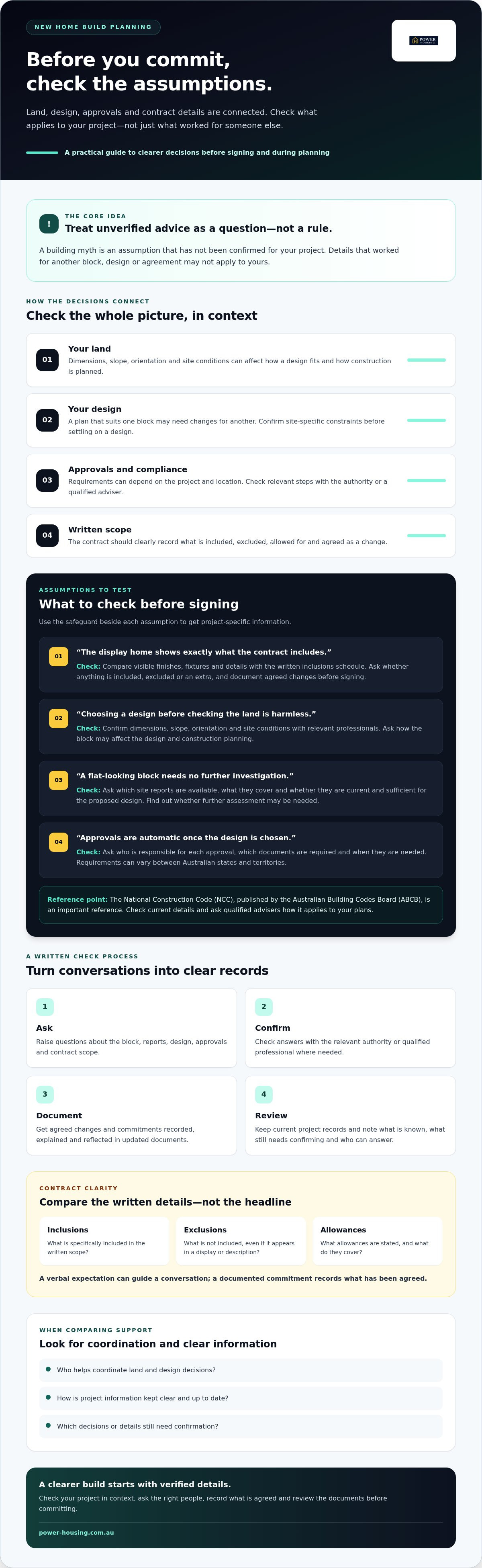
Many risks in a new home build can be reduced by checking details early, before plans, expectations and commitments become difficult to change. A building myth is an assumption that hasn’t been confirmed for your project. It may sound reasonable or have worked for someone else, but that doesn’t make it true for your block, design or agreement.
These decisions are connected. Land dimensions and conditions can influence which design is suitable. The design affects what needs to be described in the contract, and approvals can depend on the proposal and its location. Check each part in context, and ask the relevant professionals to clarify anything you’re unsure about.
A verbal expectation can guide a conversation, but only a documented commitment clearly records what’s been agreed. Before signing, compare your expectations with the written information. Ask for agreed changes to be recorded and explained, and check the updated documents reflect them.
Myth: the display home shows exactly what the contract includes
A display home helps you picture a finished space, but its features may differ from the contractual inclusions. Don’t assume finishes, fixtures or other visible details are included just because they’re on show. Read the written inclusions schedule alongside your expectations. If something doesn’t match, ask whether it’s included, excluded or treated as an extra. Get any agreed changes documented before signing.
Myth: choosing a design before checking the land is harmless
A plan that suits one block may not suit another. Dimensions, slope, orientation and site conditions can affect how a design fits and what changes may be needed. Before settling on a design, confirm site-specific constraints with relevant professionals. A land-selection guide can help you identify questions to ask, while custom home design assistance may help you consider how a design could respond to a particular parcel.
Include approvals in the same conversation. Don’t assume a design can proceed unchanged without checking which approvals or adjustments may apply to your project. Requirements can vary, so confirm them with the relevant authority or a qualified professional before relying on an assumption.
Tailored house and land package coordination is one way to consider land and design decisions together. Whether you’re comparing support options or making checks independently, aim to understand how the block, proposed design, written scope and approval steps fit together. Record what’s known, what still needs confirming and who can answer your questions.
Before signing: test myths about site suitability, design and approvals
A design that works well on one block may need changes to suit another. The land’s dimensions, slope and orientation can affect how a home fits, while site conditions may influence design choices and construction planning. Checking these details early gives you a clearer basis for comparing options before you commit.
Site investigations can uncover information that isn’t visible during a walk around the block. Existing reports may cover some aspects, but don’t assume they answer every question about soil, services or other site constraints. Ask which reports are available, what each one covers and whether further assessments may be needed. Only relevant professionals can advise on your specific site and any design or engineering implications.
Myth: a flat-looking block needs no further investigation
A level-looking surface doesn’t confirm what lies below it or whether services and other constraints could affect the proposal. Review available site reports and ask a qualified adviser whether they’re current and sufficient for the design you’re considering. If information is missing or unclear, find out what further assessment is appropriate before treating the site as suitable. Don’t assume a soil classification or engineering outcome in advance.
Myth: approvals are automatic once the design is chosen
Selecting a design is separate from confirming the approvals and compliance checks relevant to your project. The National Construction Code (NCC), published by the Australian Building Codes Board (ABCB), is an important reference point. Check the National Construction Code reference for current details, and ask qualified advisers how it applies to your plans.
Approval pathways and requirements can vary between Australian states and territories, so don’t treat general advice as specific to your location. Before signing, ask who is responsible for each approval step, which documents are required and when they’re needed. Confirm the answers with the relevant authority or a qualified adviser, then keep the information with your project records.
These checks help turn assumptions into questions you can resolve. Power Housing’s tailored house and land package coordination and custom home design assistance can be one option for considering land and design decisions together. Explore house and land package support as you compare how different options address your block and design priorities.
Compare build assumptions: contract scope, inclusions and allowances
A package name or headline description can help you compare options, but it may not spell out every project detail. Examine the written scope and specifications to understand what has been agreed. Check inclusions, exclusions and allowances alongside each other. Ask for unclear wording to be explained before you sign.
An allowance is a provision for an item or selection that hasn’t been confirmed in full. It isn’t necessarily a final specification or a promise of a particular product or outcome. Ask what the allowance covers, which decisions remain open and how the final selection will be recorded. The right questions depend on the contract and your project.
Myth: “turnkey” means every preferred feature is included
The word “turnkey” doesn’t replace the written scope. What it means for your build depends on the specifications and agreed documents. Check fixtures, finishes, site works and landscaping against what you expect. Don’t assume an item is included or excluded based on the label alone. Ask for anything unclear to be clarified in writing before signing.
Myth: the headline price captures every project decision
A headline figure can’t tell you whether the scope matches your choices. Compare what each written proposal says it covers and the assumptions it relies on. Ask how provisional items, variations and selections are documented, including how you’ll confirm a change. Keep detailed estimates and hidden-cost analysis for a dedicated building-cost guide, rather than treating this scope check as a full budget review.
Use this quick comparison as a starting point, then check the actual contract documents:
| Document detail | What to check |
|---|---|
| Inclusions | Which items, specifications or work are expressly listed? |
| Exclusions | What does the document say isn’t covered, or still needs confirmation? |
| Allowances | What remains undecided, and how will the final selection be recorded? |
Read the documents as a set, not as isolated sales descriptions. If wording conflicts or an answer is only verbal, ask for clarification and make sure the written record reflects what you’ve agreed. External material, including independent industry publications, shouldn’t replace advice about your specific contract from a suitably qualified adviser.
These checks help prevent new home build mistakes caused by treating a broad label as a complete specification. If you’re comparing how land and design decisions can be coordinated, explore Power Housing tailored house and land packages as one option.
During planning, prevent new home build mistakes with a written check process
Keep decisions clear as your plans develop. A simple written routine can help you spot gaps while there’s still time to ask questions. It won’t prevent every issue, but timely clarification can reduce misunderstandings about what’s been discussed, selected or agreed.
- Ask: Raise questions about unclear drawings, selections, responsibilities or proposed changes.
- Confirm: Check that the answer reflects your understanding, including any limits or conditions.
- Document: Request written confirmation of important decisions and changes.
- Review: Compare updated documents with the agreed design and specifications, and query anything that doesn’t match.
Keep current drawings, selections, approvals and written decisions together in an organised project file. Label superseded versions clearly so you can distinguish the latest documents from earlier drafts. After a meeting or call, send a brief written summary of the decision and ask the relevant person to confirm or correct it. This creates a useful record without relying on anyone’s memory.
A written change record gives everyone a shared reference for what was agreed and which documents should reflect it.
Myth: verbal conversations are enough to lock in a decision
A conversation can clarify an issue, but don’t assume it updates the contract, drawings or selections. Ask for important decisions and changes to be confirmed in writing, then check that the revised documents show the agreed design or specification. If contract wording is unclear or the implications are significant, consider independent professional or legal advice before proceeding.
Myth: every change can be made later without consequences
Possible changes may depend on timing, approvals, availability and the terms of your contract. Before requesting a variation, ask what process applies, who needs to approve it and how the decision will be recorded. Don’t assume a change can be made or predict its effect until you’ve received project-specific information and checked the relevant documents.
Use this routine throughout planning, not only when something goes wrong. It gives you a consistent way to check new information and keep decisions aligned as the project develops. These are practical safeguards, not a promise that every issue can be avoided.
If you’re weighing up how design decisions fit your plans, explore custom home design assistance as one option to consider.
Choose informed support to avoid new home build mistakes
Use your checks as a practical review before committing, not as a promise of a problem-free build. Revisit the details that matter: whether the design suits the land, what the written scope includes, which decisions remain open, and what approvals or documents need checking. Note unanswered questions and clarify who is best placed to answer them.
Support options can differ. Compare how each provider helps coordinate land and design decisions, what project information they help organise, and where their role ends. Tailored house and land package coordination and custom home design assistance may suit buyers who want to consider the land and proposed design together. They’re options to weigh against your needs, not requirements for every build.
Questions to ask before choosing building support
Ask direct questions and look for clear, project-specific answers:
- How will the proposed design be checked against the chosen land?
- Which land and design decisions, drawings or other project information does the provider help coordinate?
- Which matters fall outside the provider’s stated scope, and who should I contact about them?
These questions help you understand what support involves before you rely on it. Keep the answers with your other project records, and seek qualified advice for matters the provider doesn’t cover, including contract or approval questions where appropriate.
Turn your checks into a confident next step
Before a discussion, gather your priorities, any available land details and the questions you haven’t resolved. You don’t need every decision finalised. A clear list of what matters most, such as how the design could suit the parcel or which details need documenting, helps keep the conversation focused.
As you continue researching, use a house-and-land package guide to explore how land and design choices can be considered together, and a new-build process guide to understand the broader stages. If those guides link to further resources, check that each one addresses your circumstances rather than assuming general information applies to your project.
The aim of these new home build mistakes to avoid checks is informed decision-making, not certainty about every outcome. If you’d like to discuss your land and design needs, you can speak with Power Housing about its tailored house and land packages and custom home design assistance. Share your priorities and unresolved questions, then take the time you need to decide whether that support is right for you.
Take your next build decision with confidence
The most useful new home build mistakes to avoid checks are practical: match the design to the land, read the written scope carefully and record decisions as plans change. Confirm what still needs checking, including approvals and responsibilities, rather than relying on assumptions or verbal expectations.
These steps can help you make informed choices, but they can’t guarantee a problem-free build. The right support depends on your priorities. Compare how providers coordinate land and design decisions, what information they help organise and which matters sit outside their scope.
Power Housing offers tailored house and land package coordination and custom home design assistance for buyers considering these choices together. If you’re ready to talk through your plans, discuss your land and home design plans with Power Housing.
Take it one decision at a time. Clear questions and considered choices can help you move forward with greater confidence.
Frequently Asked Questions
What is the biggest mistake to avoid when building a new home?
Committing before checking that the land, design and written scope work together is a major risk. A plan that suits another block may need changes on yours, and a package description may not explain every inclusion. Before signing, review available site information, compare specifications with your expectations and clarify unanswered questions in writing. These early checks are among the most useful new home build mistakes to avoid.
Is a display home the same as the home included in my contract?
Not necessarily. A display home helps you see a design, but its features may differ from the inclusions in your contract. Check the written inclusions schedule against the fixtures, finishes and other details you expect. Ask whether each item is included, excluded or still to be selected. If you agree to a change, request written confirmation and check that the relevant documents reflect it before signing.
Can I choose a house design before buying land?
You can explore designs before choosing land, but don’t assume a preferred plan will suit every block unchanged. Dimensions, slope, orientation and site conditions may affect its suitability and any adjustments required. Once you have a specific parcel in mind, ask relevant professionals to assess how the design fits and what further checks may be needed. Considering land and design together can help surface questions before you commit.
What should I check in a new home building contract?
Check the written scope, inclusions, exclusions, specifications, allowances and how variations are handled. Compare those details with your selections and any promises or changes discussed. Ask what remains undecided, who confirms outstanding choices and how updated documents will be recorded. Don’t rely on a package label or verbal explanation alone. If a term is unclear or consequential, consider getting independent legal or professional advice before signing.
Do I need a soil test before building a new home?
Whether further soil assessment is needed depends on the site, available reports, proposed design and advice from relevant professionals. A block that looks flat can’t reveal all ground conditions or other constraints. Ask what site reports are available, what they cover and whether they’re suitable for your proposed build. Don’t assume a soil classification or engineering outcome without project-specific assessment and qualified advice.
How can I avoid unexpected changes during a new home build?
You can reduce misunderstandings by clarifying decisions early and keeping a current written record, though no process can prevent every change. Ask how selections, variations and approvals are handled, and confirm important decisions in writing. Keep current drawings, specifications and approvals together, clearly separating superseded versions. Before agreeing to a change, ask how it may affect the project and check the relevant contract terms with an appropriate adviser.


