

What if the most useful custom home build timeline isn’t a single completion date, but a series of decisions and milestones you can plan around? If you’re asking how long a custom home takes, the answer depends on more than time on site. Design choices, land checks, approvals and construction all shape the schedule.
It’s understandable to feel unsure about when the clock starts or how a change early in the process could affect your move-in plans. A clear view of each stage can help you set realistic expectations, compare schedules on the same basis and spot where extra time may be needed.
This guide follows the journey from early planning through to handover. You’ll see what happens at each stage, which project and industry factors can affect the timeframe, and what to ask when comparing build options. If you’re considering a tailored house and land package, matching land choice with design priorities can help organise early decisions. With the right questions in hand, you can plan with greater confidence while allowing room for the unexpected.
Key Takeaways
- Understand when the custom home build timeline begins and why the full journey includes planning, approvals, construction and handover.
- Identify how land conditions, design complexity and approval pathways can affect pre-construction planning.
- Compare construction schedules by milestones, dependencies and assumptions, rather than relying on a single completion date.
- Track selections, approvals and requested changes so you can follow progress and raise timing questions early.
- See how coordinating land and design decisions can support a more organised start, without guaranteeing approvals or completion dates.
Custom home build timeline in Australia: when does the clock start?
A custom home build timeline covers the full sequence from early land and design decisions through approvals, construction and handover. It isn’t always the same as the number of months a builder quotes for work on site. Design development and pre-construction happen before physical building begins, and the total elapsed time depends on the project, its site and the relevant state or territory requirements.
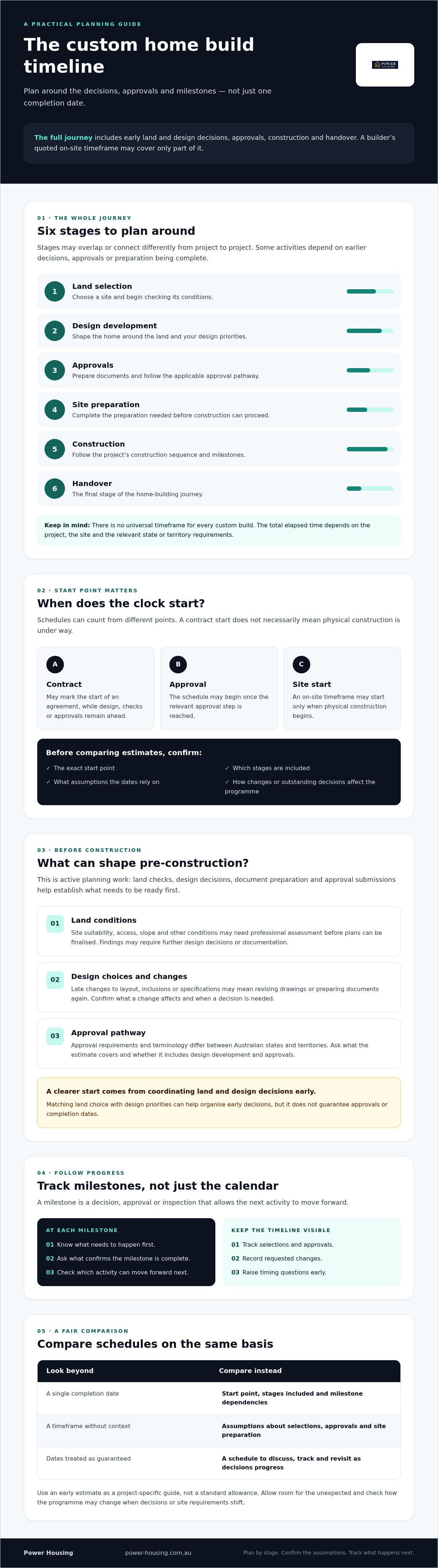
This distinction matters when comparing estimates. One schedule may start at contract signing, while another may count from approval or the date construction begins. Before using an estimate to plan a move, check its start point, what stages it includes and what assumptions the dates rely on.
What stages make up a custom home build timeline?
The journey commonly moves through land selection, design development, approvals, site preparation, construction and handover. These stages can overlap or connect in different ways. Some design work may progress alongside early land checks, while construction may depend on decisions, approvals or site preparations being completed first. A high-level residential construction process overview can help explain how work progresses from planning and foundations to framing and finishing, although each project’s sequence will vary.
A milestone is a point where a decision, approval or inspection allows the next activity to move forward. Confirming a design, for example, can support the preparation of plans, while completing site preparation can enable construction work to proceed. Ask which milestones appear in the proposed schedule, what confirms each one is complete and what needs to happen before the next stage starts.
When does the build timeline officially begin?
Ask the builder whether the quoted timeframe begins at contract, approval, site start or another clearly defined point. Contract signing may mark the start of an agreement, but it doesn’t necessarily mean physical construction is under way. Design finalisation, land checks and approval steps may still sit ahead of the on-site schedule.
Get the start point and assumptions in writing. Check whether the estimate depends on finalising selections, receiving approvals or completing site preparation. Ask how changes or outstanding decisions affect the programme. This gives you a clearer basis for comparing schedules and planning around them.
Land and design decisions are connected, so coordinating them early can support a more organised start. Power Housing coordinates tailored house and land packages and assists with custom home design, helping buyers consider how their land choice aligns with their design priorities. This support doesn’t guarantee approvals or construction dates. Treat the builder’s estimate as a schedule to discuss and track, not a promised handover date.
Pre-construction timeline: design, land checks and approvals
Pre-construction is active work, not simply time spent waiting for the build to begin. Land checks, design decisions, document preparation and approval submissions help establish whether the proposed home can proceed and what needs to be ready first. The order and duration depend on the site, design and applicable approval pathway, so there’s no universal timeframe for every custom home build timeline.
Use an early estimate as a project-specific guide, not a standard allowance. Ask the relevant professionals what the estimate covers, what information it relies on and which steps could affect the schedule. In particular, check whether the estimate includes time for design development and approvals or begins only once those steps are complete.
How land and design decisions affect the schedule
A design needs to respond to the land it’s intended for. Site suitability, access, slope and other conditions may need professional assessment before plans can be finalised. If an assessment identifies something that changes the design or preparation approach, further documentation or decisions may be needed before the next step can proceed.
Keep design decisions moving, too. A late change to the layout, inclusions or specifications can mean revising drawings or preparing documents again. Customisation isn’t the problem; the key is understanding what a change affects and when the decision is needed. Coordinating land choice with design priorities early can give the planning process a clearer starting point. Power Housing supports buyers with tailored house and land packages and custom home design assistance.
What approvals and documents may need to be ready?
Approval pathways and terminology differ between Australian states and territories, and requirements depend on the project. The National Construction Code is a national framework for building requirements, but its application and administration operate through the relevant jurisdiction. Confirm current requirements with the appropriate building or planning authority and the professionals responsible for your project.
Depending on the proposal and pathway, preparation may involve plans, specifications, site information or other supporting documents. Don’t assume one checklist applies everywhere. Ask the relevant professionals to confirm:
- Which approvals and documents apply to your project and location.
- Who prepares, checks and submits each item.
- Which decisions, reports or approvals must be completed before the next stage can start.
Get responsibilities and dependencies in writing. This makes it easier to see what’s outstanding, who is handling it and whether a design decision or submission is holding up progress. It also helps you compare schedules on a like-for-like basis, rather than relying on a headline timeframe that may exclude pre-construction work.
Construction timeline: follow the milestones, not just the calendar
Once on-site work begins, progress is easier to understand by tracking what needs to happen next, not just counting weeks. A custom home build timeline may be affected by the order of work, inspections, trade availability and whether materials arrive when required. The sequence below is a guide, not a universal contractual programme. Builders may use different terms or combine stages depending on the design and project.
Which milestones should homeowners track?
Ask what work marks each milestone and what evidence, inspection or update confirms it’s complete. A stage may depend on the previous work being finished and checked before the next trade can proceed. For a useful update, ask what has been completed, what is next and whether anything is waiting on a decision, inspection or delivery.
| Milestone | Key activity | Dependency and timing caveat |
|---|---|---|
| Site preparation | The site is prepared for building work. | May depend on access, site conditions and required preparation. |
| Foundations | Foundation work establishes the base of the home. | Progress depends on preparation and any required checks. |
| Frame | The home’s structural frame takes shape. | Follows foundation work and can rely on materials and trade coordination. |
| Enclosure | External elements are installed to enclose the structure. | Sequencing and weather conditions can affect progress. |
| Services | Relevant services are installed or connected as planned. | Timing depends on coordination with other work and inspections. |
| Internal fit-out | Interior components and finishes are installed. | Selections, product availability and trade sequencing matter. |
| Practical completion | The project reaches the builder’s stated completion milestone. | Confirm what work, checks and outstanding items this milestone includes. |
Use the table as a prompt for discussion. Ask your builder how each milestone is defined in your programme, which inspection or update confirms it, and what must happen before the next stage can start. Comparing these details can show whether two proposed schedules use the same milestone definitions.
Why can construction take longer than expected?
Weather can interrupt site work, while labour availability and supply issues may affect when trades or materials are ready. Inspections can also influence sequencing, and an approved change may require additional work or re-coordination. The effect depends on the task and whether other work can continue in the meantime.
There’s no reliable universal duration for a custom build because each project depends on its own site, design, trade sequence and approvals. A disruption to the schedule isn’t automatically a confirmed new completion date. Ask what has changed, which milestones are affected and when the builder expects to provide an updated programme. This keeps the discussion grounded in project progress rather than an assumed handover date.
How to plan around build delays and keep the timeline visible
A useful custom home build timeline should show more than a target finish date. Compare proposed schedules by milestone, what each milestone depends on and the assumptions behind the dates. Check whether the schedules cover the same stages and use the same start point. This makes it easier to compare estimates and ask informed questions before making plans around them.
What should you ask about a builder's proposed schedule?
Start by confirming the schedule’s start point and scope. Ask which milestones are included, what’s excluded and whether the dates depend on approvals, final selections or site conditions. Then clarify how variations, requested changes or unexpected site issues may affect the programme.
Agree on how progress and schedule changes will be communicated. Regular written updates help you keep a record of completed milestones, upcoming decisions and revised dates. If the schedule changes, ask for the reason, the affected milestones and an updated estimate in writing. A delay or disruption is not, by itself, confirmation of a new completion date.
How can you reduce avoidable delays?
Some issues, such as weather, supply availability or approval processes, are outside a homeowner’s control. Clear responsibilities and timely decisions can help keep dependent tasks moving. Before work progresses, confirm who is responsible for preparing documents, providing selections, seeking approvals and responding to questions.
Where possible, make design and specification decisions by the agreed deadlines. If you’re considering a change, ask what it affects and whether it needs revised documentation or alters the sequence of work. Discuss and record any change rather than assuming it has no schedule impact.
- Keep a written record of milestone dates, decisions and outstanding actions.
- Ask who is responsible for each next step and when a response is needed.
- Request an updated programme when a change affects agreed dates or dependencies.
Keep moving plans flexible until completion and handover are confirmed. Avoid locking in a move date based only on an early estimate. Allow room for the schedule to change and check what the builder needs to confirm before handover.
If you’re still working through the early decisions, review Power Housing’s house and land packages while considering how your land and design priorities fit together. Coordinating those considerations can support a more organised start, though it can’t guarantee approvals or construction dates.
Choose a custom home pathway that supports a clearer start
There are two broad ways to bring land and design together. You might source land separately, then work through how your preferred home design could suit it. Or you might explore a tailored house and land package, where land and design considerations are coordinated as part of early planning.
Neither pathway is automatically faster or cheaper. The right fit depends on your priorities, the land, the design and the roles of the providers involved. Coordination can help you identify questions and decisions earlier, but it doesn’t guarantee approvals or set a construction completion date. Your custom home build timeline still depends on the specific project and the schedule confirmed by the relevant providers.
How does land and design coordination fit into the timeline?
Land and design need to work together. The shape, slope or access of a block may influence which design options are practical, while your household’s needs help define the spaces and features to consider. Exploring both sides early can make the next decisions clearer and help you understand what needs professional assessment.
Power Housing coordinates tailored house and land packages and assists with custom home design. This support focuses on early planning and matching land and design needs. Construction scheduling remains project-specific, so confirm the proposed sequence, responsibilities and timing directly with the relevant providers.
What is a practical next step before you commit?
Before choosing a pathway, write down the information and questions that matter to your household. Bring details such as:
- Land you own or are considering, along with any known site information.
- Your household’s needs, including the spaces and features you want to prioritise.
- Design preferences and decisions you’re still weighing up.
- Your timing expectations, including any move plans that need flexibility.
Then ask each provider to clarify who handles each part of the process, which approvals and documents may be needed, and what assumptions sit behind any proposed schedule. Confirm how updates will be shared and how changes to design or selections could affect the programme. These answers give you a more useful basis for comparing options than a headline timeframe alone.
Once you’ve outlined your priorities, you can read about Power Housing’s house and land packages as you consider a tailored house and land package or custom home design assistance. Start with the questions that matter to you, then confirm project-specific timing with the providers responsible for each stage.
Plan your next step with clarity
A custom home build timeline is easier to understand when you separate early planning and approvals from on-site construction. Confirm when a proposed schedule starts, which milestones it includes and what assumptions could affect progress. Then track decisions, approvals and updates in writing, so you can respond to changes with a clearer picture of what happens next.
Build your move plans around confirmed information, not an early estimate. The right pathway depends on your land, design priorities and household needs. Bringing these considerations together early can help organise the starting decisions, but it can’t guarantee approvals or a completion date.
Power Housing coordinates tailored house and land packages and provides custom home design assistance to help buyers explore how land and design needs fit together. Explore tailored house and land options with Power Housing to discuss your priorities and consider your next step. Confirm project-specific timing with the providers responsible for each stage.
Frequently Asked Questions
How long does a custom home build take in Australia?
There’s no single timeframe that applies to every custom home. The full custom home build timeline includes early planning and design, approvals, on-site construction and handover, while a builder’s estimate may cover only part of that journey. The site, design complexity and relevant state or territory requirements all affect elapsed time. Ask for a project-specific schedule that clearly states its starting point, included stages, dependencies and assumptions.
What is the first stage of a custom home build?
The first stage is usually early planning: clarifying your land options, household needs and design priorities. If you already have land, its suitability and conditions may need professional assessment. If you’re still looking, consider how potential land choices could affect the design you want. The exact sequence varies by pathway, so ask which decisions and checks need to happen first and who is responsible for each.
Do design changes delay a custom home build?
They can, depending on when you request a change and what it affects. A revised layout or specification may require updated drawings, documentation, approvals or trade coordination, particularly if later work relies on the original decision. A change won’t necessarily delay every project, but its effect should be checked rather than assumed. Ask how requests are assessed, approved and recorded, and whether the schedule will be updated.
What can delay a new home build in Australia?
Weather, site conditions, labour availability, material supply, inspections and changes to the approved design can all affect progress. Some issues may hold up a specific task while other work continues; others can affect later milestones that depend on it. Ask the builder which activities are affected, what can proceed in the meantime and when you’ll receive a revised programme. A disruption alone doesn’t confirm a new completion date.
Does council approval happen before construction starts?
Required approvals generally need to be in place before the relevant construction work can proceed, but the pathway and terminology vary across states and territories. Council may not be the only or relevant assessing body for every project. Confirm which approvals apply with the appropriate authority and project professionals. Ask who prepares and submits each document, and which approval must be received before site work can begin.
Can I move in on the estimated completion date?
Treat an estimated completion date as a planning guide, not a confirmed move-in date. Construction can be affected by changing conditions, and the date may shift as the project progresses. Before booking a move, confirm the current programme with the relevant provider and wait until completion, handover and any required occupation-related approvals are confirmed. Keeping temporary plans flexible can reduce pressure if the estimated date changes.
How can I track progress on my custom home build?
Ask for written updates against agreed milestones, with clear notes on completed work, next steps, dependencies and outstanding decisions. Confirm what evidence or inspection marks each milestone as complete, and request revised dates when the programme changes. Keep a record of selections, approvals and requested changes, including who is responsible and when a response is needed. This gives you a practical view of progress without relying on the calendar alone.


