

A house and land package should be shaped around your priorities, not force your plans into a pre-set design. A new home package specialist can help connect land selection with home design, but the guidance and flexibility offered can vary.
It’s understandable to wonder whether a proposed package will suit your household, fit the block and reflect what matters most to you. You may also want clarity on who will guide each decision and what’s included before you commit. Asking these questions early can help you compare options on the same basis.
This guide explains what practical coordination and custom home design assistance to look for, what to ask about your priorities and the package process, and how to judge whether guided support suits your build. You’ll also learn how to keep your needs at the centre of decisions about land and design. With a clearer picture of the specialist’s role, you can approach the next conversation with more confidence.
Key Takeaways
- A new home package specialist can help connect land and design decisions, but clarify their role and inclusions before proceeding.
- Check how site characteristics may shape design options, and confirm suitability for the specific block rather than assuming a match.
- Compare specialist coordination, builder discussions and self-directed research against your available time, confidence and project needs.
- Ask consistent questions about your brief, land options, design assistance and responsibilities, then compare the answers.
- Power Housing coordinates tailored house and land packages and provides custom home design assistance, so you can discuss your priorities and preferred design direction.
What does a new home package specialist do for a buyer?
A new home package specialist helps coordinate land and home-design decisions for a new build. Their role is to understand what matters to you, then help explore how land opportunities and residential design options might fit those priorities. That gives you a clearer basis for comparing possibilities before deciding what to pursue.
Land and design coordination can help you make more informed choices by bringing your household priorities and the site into the same conversation. It doesn’t guarantee a particular block or design will be suitable. The exact role, process and package inclusions vary, so ask what the specialist will handle and what sits outside their scope before proceeding.
House and land packages may draw on a standardised building approach similar to Tract housing, where homes are built in volume on a tract of land. A specialist can help you understand how a tailored package discussion relates to your preferences, rather than assuming every option is a perfect fit.
How does a specialist support a house and land decision?
Start with your brief: how many bedrooms you need, how you use shared spaces and which design features matter most. These priorities can guide discussions about land and home options. Site characteristics may also affect which designs are practical. For example, a sloping block or a particular orientation may influence design choices, so confirm site-specific advice with the relevant professionals.
Keep responsibilities clear. Package coordination and custom home design assistance aren’t a substitute for legal advice on contracts, lending advice about borrowing or construction advice about how a home will be built. Ask who is responsible for each area and where you’ll need independent or specialist advice.
When is specialist guidance useful?
Guidance can be helpful if you’re building for the first time and want a clearer sequence for early decisions. Rather than trying to settle every detail at once, you can discuss your priorities, explore land and design options, then identify questions that need further checking.
It can also help when you’re balancing household needs, design preferences and land suitability. A defined brief doesn’t make guidance unnecessary. You can use a specialist’s coordination to test whether a package appears to align with your requirements and identify gaps to clarify before moving forward.
Power Housing coordinates tailored house and land packages nationally across Australia and provides custom home design assistance. Confirm the specific scope of support for your situation, and keep your priorities central as you explore your options.
How a specialist connects land choices with custom home design
Land and design decisions affect each other. The block you consider can influence which layout or design features are practical, while your household’s needs help determine what kind of site to look for. A new home package specialist can bring these factors into the same discussion, helping you explore options against a clear brief rather than treating land and home design as separate choices.
Consider land and design together, because the right home for your household also needs to suit the specific site. That’s a starting point for informed discussion, not a guarantee that a particular block and design will be a match. Suitability depends on the details of both.
What should buyers clarify before exploring package options?
Write down who’ll live in the home, how you use your space each day and what may change in future. Consider household size, daily routines, accessibility needs and plans such as working from home or accommodating a growing family. Then rank your design preferences. Separate must-haves, such as distinct living areas, from flexible extras, such as a particular finish.
Discuss your budget realistically, including the overall limits you want to work within. This helps keep package conversations focused, but it isn’t lending advice. Be clear about what you know, what you still need to confirm and which decisions depend on further professional input.
Why does the block matter to home design?
A block’s dimensions, orientation and access can affect how a home might sit on it and which layout options are worth exploring. Site conditions may also need to be assessed before you can judge whether a design is suitable. Don’t assume a design that appeals on paper will work unchanged on every block.
Check planning controls and site-specific requirements with the appropriate professionals. Requirements can vary by jurisdiction and site, so confirm what applies to the land you’re considering rather than relying on a general assumption.
Illustrative example: A household wants bedrooms grouped together, a flexible study space and good natural light in the main living area. Those priorities can prompt questions about layout, room placement and the block’s orientation. If access or site conditions present constraints, the design discussion may need to account for them. This example illustrates the questions to explore, not a promise that any particular block can accommodate the preferred design.
Power Housing coordinates tailored house and land packages and provides custom home design assistance. If you’re ready to discuss your priorities and preferred design direction, explore tailored house and land packages as a starting point for that conversation.
Specialist, builder or going it alone: which approach suits you?
There’s no single right way to plan a new build. A new home package specialist may help coordinate land and design discussions. Speaking directly with a builder can suit buyers who already know what they want to build and who to approach. Self-directed research offers more control over the process, but you’ll need time to compare options and work out which questions to ask.
Choose based on your confidence, available time and the complexity of your brief. If you’re weighing several household needs against different land possibilities, coordination may help you organise the discussion. If your plans are straightforward and you’re comfortable handling research, you may prefer to start independently. Neither path guarantees a better result.
Concerned a specialist might steer you towards a standard option? Ask how they’ll capture your preferences, how those preferences affect the options they present, and how you can raise alternatives. A useful conversation should make your priorities visible, not leave you guessing how a package was selected.
What should a new home package specialist be clear about?
Before proceeding, establish who coordinates each part of the package and which decisions remain yours. Request written confirmation of the service scope, inclusions, exclusions and any applicable fees. Clarify what happens if your priorities change or an option doesn’t suit. Then compare that information with what you expect to handle yourself.
Read relevant contracts carefully and seek independent professional advice if you’re unsure about their terms. A package discussion isn’t a substitute for advice on legal obligations, borrowing or construction matters. Clear boundaries help you understand where coordination ends and another professional’s expertise is needed.
When might buyers need additional professional advice?
Some questions call for specific expertise. A legal professional can advise on contract terms; a financial adviser or lender can address financial questions; and appropriately qualified planning or technical professionals can assess matters related to land, design and construction. Confirm who is responsible for answering each question rather than assuming the specialist covers every area.
Building requirements can vary between Australian states and territories. If a question relates to the National Construction Code (NCC), check which provisions apply to the project with the relevant authority or an appropriately qualified professional. The Australian Building Codes Board provides information about the NCC, but project-specific and jurisdictional requirements should still be confirmed.
Keep your comparison practical: assess the time and support each approach requires, then choose the process that fits your needs. You can also ask how a provider’s coordination and design assistance relate to your brief before deciding whether to continue the discussion.
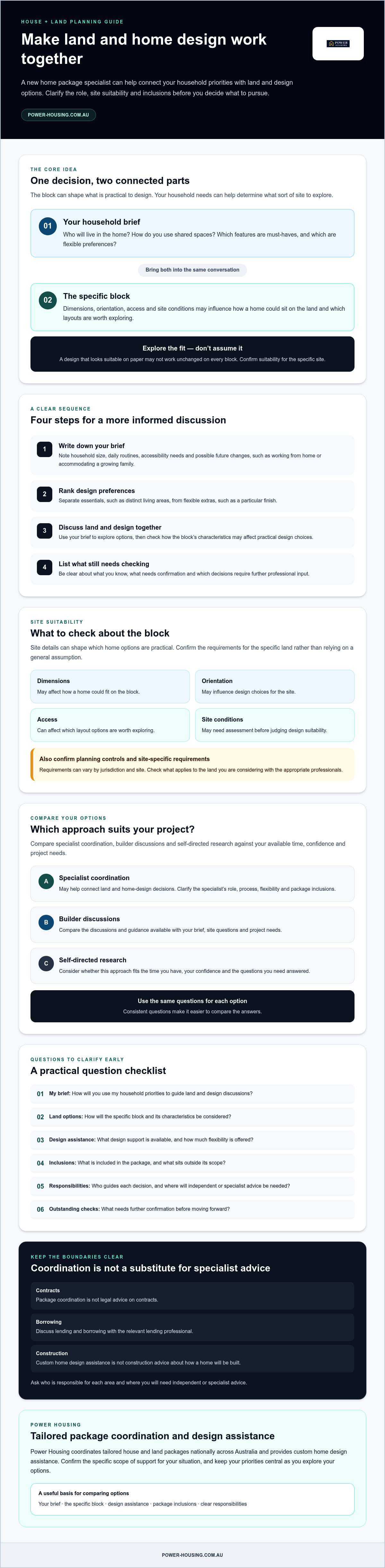
Questions to ask before engaging a new home package specialist
A useful first discussion should help you understand how your priorities will shape package exploration, not leave you with a list of assumptions. Take these questions with you, record the answers and use the same criteria when comparing providers.
What should happen in an initial discussion?
Be ready to explain your household’s needs, preferred features and practical constraints. Ask what information would help the specialist understand your brief, and what you can expect after the discussion. Clarify how updates are shared, when you’ll be asked to make decisions and how changes to your requirements are handled as options are explored.
- How will you learn what matters to my household? Ask how the specialist gathers and records your needs, preferences and non-negotiables.
- What land options might suit my brief? Find out how options are explored and what information is available about each one.
- How does design assistance relate to my preferences? Ask how your preferred layout or features will inform package discussions, and what may need further assessment.
- Who coordinates each part, and what decisions stay with me? Clarify responsibilities, decision points and who you contact with questions.
- How will land suitability and design assumptions be checked? Ask what needs confirmation, who can provide specialist input and when that should happen.
- What’s included, excluded and documented? Request the scope in writing, including any applicable fees, and ask what happens next.
- Who should I contact if a question is outside your scope? Establish how technical or other specialist questions will be referred to the appropriate professional.
How can buyers compare the proposed scope?
Look beyond a verbal overview. Compare written responsibilities, inclusions, exclusions and the process for answering questions. Check whether the provider explains how your land and design preferences will be considered, and which site or design assumptions still need verification.
Record each provider’s answers against the same questions. Note anything unclear, inconsistent or dependent on further advice, then follow up before making a commitment. Review relevant documents independently and seek professional advice if you’re unsure about their meaning or implications.
A clear explanation of scope helps you judge whether the support fits your needs, without assuming every buyer requires guided coordination. To discuss your priorities and questions, explore tailored house and land packages with Power Housing.
Explore a tailored home package with Power Housing
Choosing a package involves a series of connected decisions. Your household requirements shape the home design you explore, while land options can influence what may be practical. Power Housing coordinates tailored house and land packages nationally across Australia and provides custom home design assistance, helping buyers consider land opportunities and residential designs in relation to their requirements.
The starting point is your brief, not an assumption that a particular block, design or package will be available or suitable. Share what matters most, ask how design preferences can inform the discussion and confirm exactly what support is included before deciding how to proceed.
What to bring to a first conversation with Power Housing
You don’t need every detail settled. A short, honest outline gives the discussion direction and helps you identify what still needs checking. Consider bringing:
- Household requirements: who will live in the home, how you use your spaces and any accessibility needs or future plans to consider.
- Preferred features: a shortlist of layout ideas or design preferences, ranked as essential, desirable or flexible.
- Land preferences: any preferences you have about location or block characteristics, without assuming a particular option is available.
- Budget understanding: the overall limits you’re working within and any questions you have. This helps frame the conversation, but doesn’t replace independent financial advice.
- Questions about flexibility: ask which design preferences can be explored and what would need further assessment for a specific site.
Bring your unanswered questions too. Ask what information would be useful, what happens after the discussion and how any specific scope, responsibilities and next steps will be confirmed. Don’t feel you need to commit before you understand the proposed approach.
How to take the next step with confidence
After the conversation, compare what you heard with the questions and criteria in the previous section. Did the discussion reflect your priorities? Were responsibilities and exclusions clear? Do you know which site or design details still need confirmation, and who to ask about them? Write down anything that remains uncertain and seek clarification before making commitments.
A considered conversation can help you decide whether guided coordination and design assistance suit your needs. If you’re ready to discuss your household priorities, questions and preferred design direction, Discuss your new home plans with Power Housing. It’s a practical next step, with no need to have every decision made in advance.
Take your next step with a clearer brief
Choosing a new home package specialist starts with understanding how they’ll connect your priorities with land and design options. The right approach depends on your needs, the time you can give the process and how much guidance you want. Ask clear questions, compare the proposed scope and confirm responsibilities before making commitments.
With tailored house and land package coordination and custom home design assistance, Power Housing can help you explore how your requirements might shape a new-build project. Its stated service coverage is national across Australia. Specific options, scope and next steps should be discussed directly, so you know what’s relevant to your plans.
Ready to talk through your household priorities, questions and preferred design direction? Discuss your new home plans with Power Housing. You don’t need every detail settled to begin a considered conversation. Start with what matters most, and take the next step with confidence.
Frequently Asked Questions
What does a new home package specialist do?
A new home package specialist coordinates a buyer’s requirements with land and home-design discussions for a new build. Depending on the provider, this may involve exploring how land opportunities and residential designs relate to your brief, but responsibilities and inclusions vary. Ask for the proposed scope in writing before proceeding. Coordination isn’t legal, lending or technical advice; seek appropriately qualified professionals for contract, finance, planning or construction questions.
Is a new home package specialist the same as a builder?
Not necessarily. The roles may differ, and arrangements vary between providers and projects. Check who is responsible for coordinating the package, developing or assisting with the design, preparing relevant contracts and carrying out construction. Ask the specialist to identify any other parties involved and explain their responsibilities. Confirm the scope in writing before committing, so you understand who to contact for decisions, updates and questions at each stage.
Can a specialist help tailor a house and land package?
A provider offering custom home design assistance may help explore options around your household’s preferences. What can be tailored depends on the particular package, design and site, so don’t assume every feature can be changed or that a design will suit a block. Ask which preferences can be explored, what limitations may apply and how site suitability will be assessed. Request written confirmation of any agreed design scope and constraints.
What should I ask a new home package specialist before signing?
Ask what the service covers, what’s included or excluded, who is responsible for each decision, what design flexibility is available, and which assumptions have been made about the land. Clarify any applicable fees and request answers and relevant commitments in writing. Read documents carefully before signing. For legal, financial or technical questions, consult an appropriately qualified independent adviser. The right answer can depend on your circumstances and the specific documents involved.
Do I need to choose land before speaking with a specialist?
No, you can discuss your priorities before choosing land, and you may already have a block in mind. Share what you know about your household needs, preferred design direction and land preferences, then ask how these factors will be considered together. If you have a particular site, clarify what information is needed to assess its suitability. A discussion can help identify questions to investigate, but doesn’t guarantee a suitable block will be available.
Does a new home package specialist arrange finance?
Finance support varies by provider, so ask directly whether it forms part of the service and clarify what that support involves. Don’t assume package coordination includes lending or personal financial advice. Power Housing’s stated offerings are tailored house and land packages and custom home design assistance, not direct in-house lending. For guidance on borrowing or your financial circumstances, speak with a suitable finance professional and keep that advice separate from package discussions.
Do building requirements vary across Australia?
Yes. Building requirements and approval processes can differ between states, territories and local contexts, and may depend on the specific site and project. Don’t rely on a general national summary to confirm what applies. Check current planning and building requirements with the relevant authority or appropriately qualified professionals before making decisions. If the National Construction Code is relevant, confirm which provisions apply to your project and jurisdiction through current official guidance.


